Buy screenwriting.eu ?
We are moving the project
screenwriting.eu .
Are you interested in purchasing the domain
screenwriting.eu ?
domain@kv-gmbh.de · 0541-91531010
Buy screenwriting.eu ?
How can one calculate and plot amplitude in physics?
To calculate amplitude in physics, one can use the formula A = (maximum value - minimum value) / 2. This formula helps determine the maximum displacement of a wave or oscillation from its equilibrium position. Once the amplitude is calculated, it can be plotted on a graph by representing the maximum and minimum values on the y-axis and time or distance on the x-axis. This helps visualize the magnitude of the wave or oscillation. **
How can one calculate and plot the amplitude in physics?
To calculate the amplitude in physics, you can use the formula A = (V_max - V_min) / 2, where A is the amplitude, V_max is the maximum value of the wave, and V_min is the minimum value of the wave. Once you have calculated the amplitude, you can plot it on a graph by representing the maximum and minimum values of the wave on the y-axis and the time or distance on the x-axis. The peak-to-peak value can also be used to calculate the amplitude by dividing it by 2. **


Similar search terms for Physics
Top-Angebote
Products related to Physics:
-
CGP Books CGP GCSE 9-1 AQA Revision Question Cards 3 Books Collection Set (Biology, Physics, Chemistry)New 9-1 gcse chemistry, biology, physics collection 3 books set -aqa revision question cards. Description:- New 9-1 GCSE Chemistry AQA Revision Question Cards (CGP GCSE Chemistry 9-1 Revision) To cut to the chase, there’s more to revision than just reading through study notes. If you really want to make sure you know GCSE Chemistry, you’ll need to test yourself - and that’s where these CGP Revision Question Cards come in! There are 95 cards in the pack, covering every key Grade 9-1 AQA topic. Each one starts off with quick questions to warm you up, followed by harder questions to get your brain into top gear. Flip the card over and you’ll find full answers to each question, carefully written to help you understand everything you need to know. New 9-1 GCSE Physics AQA Revision Question Cards (CGP GCSE Physics 9-1 Revision) Reading over study notes doesn’t mean you’ll automatically remember everything - to really put your GCSE Physics knowledge to the test, try these superb CGP Revision Question Cards! There are 95 cards in the pack, covering every key Grade 9-1 AQA topic. Each one starts off with quick questions to warm you up, followed by harder questions to get your brain into top gear. Flip the card over and you’ll find full answers to each question, carefully written to help you understand everything you need to know. New 9-1 GCSE Biology AQA Revision Question Cards (CGP GCSE Biology 9-1 Revision) Let’s face it: you won’t learn much by just reading through your study notes. If you really want to make sure you know GCSE Biology, you’ll need to test yourself - and that’s where these CGP Revision Question Cards come in! There are 95 cards in the pack, covering every key Grade 9-1 AQA topic. Each one starts off with quick questions to warm you up, followed by harder questions to get your brain into top gear. Flip the card over and you’ll find full answers to each question, carefully written to help you understand everything you need to know.25,95 £*Shipping: 2,99 £Secure redirect to the provider
-
My Revision Notes: AQA GCSE (9-1) Biology, Physics & Chemistry 3 Books Collection Set - Ages 14-16 - Paperback Hodder EducationTitle in This Set: 1. My Revision Notes: AQA GCSE (9-1) Biology 2. My Revision Notes: AQA GCSE (9-1) Physics 3. My Revision Notes: AQA GCSE (9-1) Chemistry Description: Exam Board: AQA Level: GCSE Subject: Biology, Physics & Chemistry First Teaching: September 2016 First Exam: Summer 2018 Unlock your students' full potential with these revision guides from our best-selling series My Revision Notes With My Revision Notes your students can: - Manage their own revision with step-by-step support from experienced teachers with examining experience. - Apply scientific terms accurately with the help of definitions and key words. - Prepare for practicals with questions based on practical work. - Focus on the key points from each topic - Plan and pace their revision with the revision planner. - Test understanding with end-of-topic questions and answers. - Get exam ready with last minute quick quizzes available on the Hodder Education Website.19,99 £*Shipping: 2,99 £Secure redirect to the provider
-
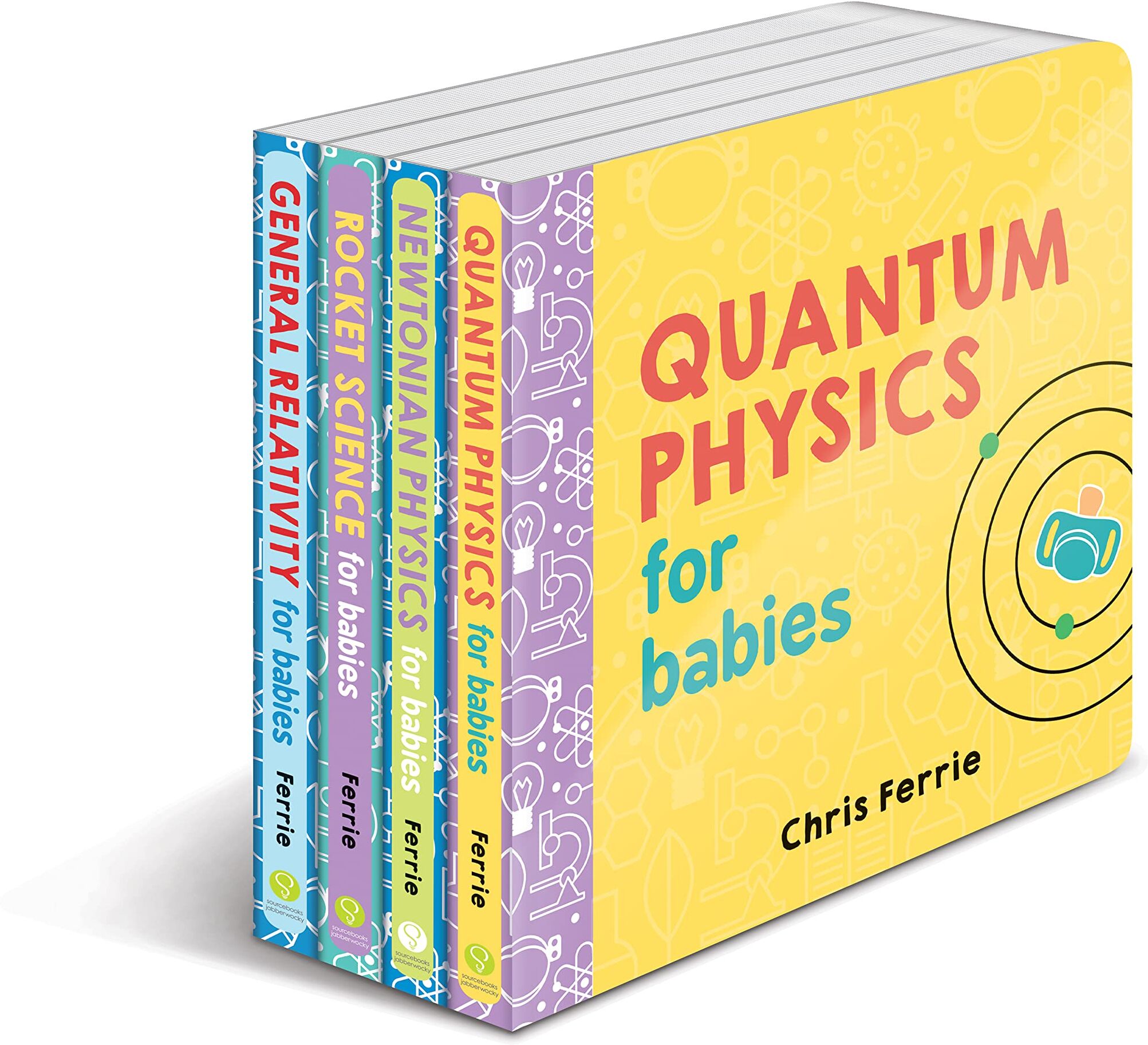
Sourcebooks ltd Baby University Four-Book Set (Quantum Physics, Rocket Science, General Relativity, Newtonian Physics)The perfect gift for your future genius! Written by an expert, the Baby University series features colorful, simple introductions to scientific principles and are beloved by babies―and grownups! Included in this Four-Book Set:• Quantum Physics for Babies• Rocket Science for Babies• General Relativity for Babies• Newtonian Physics for BabiesThis series is the perfect way to introduce basic scientific concepts to even the youngest scientist.12,99 £*Shipping: 2,99 £Secure redirect to the provider
-
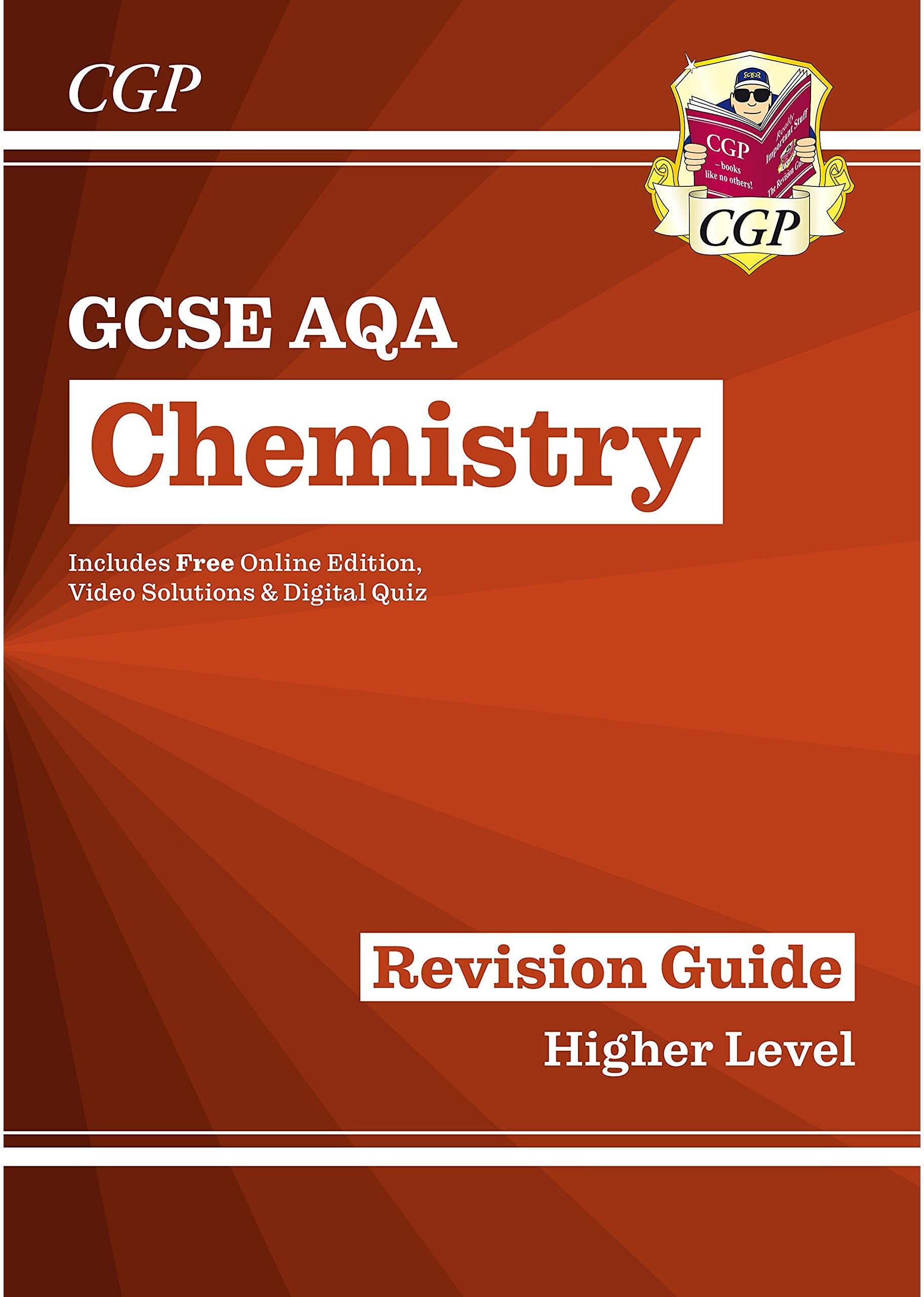
CGP Books New GCSE Biology AQA Revision Guide & Chemistry, Physics Higher includes Online Edition 9-1 Videos & Quizzes Collection 3 Books SetNew GCSE Biology AQA Revision Guide & Chemistry, Physics Higher includes Online Edition 9-1 Videos & Quizzes Collection 3 Books Set: New GCSE Biology AQA Revision Guide - Higher includes Online Edition 9-1, Videos & Quizzes: This superb Revision Guide is the perfect companion to Grade 9-1 AQA GCSE Biology (Higher level). The entire course is explained clearly and concisely, with brilliant coverage of the required practicals, maths skills and Working Scientifically, all in CGP's bold 'no-nonsense' style. New GCSE Chemistry AQA Revision Guide - Higher includes Online Edition 9-1, Videos & Quizzes: Each page is rounded off with practice questions to help cement what students have learned, with answers at the back of the book. QR codes throughout give quick and easy access to worked video solutions from our in-house experts, plus an unbeatable online Knowledge Retrieval quiz - designed to be played again and again to make all those facts stick. New GCSE Physics AQA Revision Guide - Higher includes Online Edition 9-1, Videos & Quizzes: We've even thrown in a heap of info on "What to Expect in the Exams" available to view online. Redeem the code inside the book for a free Online Edition to read on your PC, Mac or tablet - you'll have temporary access via 'My Online Products' on the CGP website from the moment you place your order. When the book arrives, just use the unique code printed inside the cover to gain full access. For the perfect revision combo, check out our matching AQA GCSE Chemistry18,99 £*Shipping: 2,99 £Secure redirect to the provider


-
What is the structure of an atom in physics?
In physics, an atom is composed of a nucleus at its center, which contains protons and neutrons. Surrounding the nucleus are electrons that orbit in specific energy levels or shells. The protons have a positive charge, the neutrons have no charge, and the electrons have a negative charge. The number of protons determines the element of the atom, while the number of electrons determines its charge. **
-
Which subtopics of quantum physics are important for the structure of the presentation on quantum physics?
The subtopics of quantum physics that are important for the structure of the presentation include quantum superposition, quantum entanglement, and the uncertainty principle. These concepts are fundamental to understanding the unique behavior of particles at the quantum level. Additionally, topics such as wave-particle duality and quantum tunneling are also crucial for providing a comprehensive overview of quantum physics in the presentation. By covering these key subtopics, the audience can gain a solid foundation in the principles that govern the quantum world. **
-
How could one structure a research paper in physics astronomy?
A research paper in physics astronomy could be structured in a typical scientific format, starting with an abstract that summarizes the key findings of the study. The introduction would provide background information and the research question, followed by a literature review to contextualize the study within existing research. The methodology section would detail the experimental or observational methods used, while the results section would present the findings. The discussion section would interpret the results and discuss their implications, and the conclusion would summarize the key findings and suggest avenues for future research. Finally, the paper would include a list of references cited. **
-
What is the structure and function of the eye in physics?
The structure of the eye in physics consists of several components, including the cornea, lens, and retina. Light enters the eye through the cornea and lens, which focus the light onto the retina at the back of the eye. The retina contains photoreceptor cells that convert the light into electrical signals, which are then transmitted to the brain via the optic nerve for processing. This process allows us to perceive and interpret the visual information from our surroundings. **


What is the structure of the physics curriculum for 10th grade?
The 10th-grade physics curriculum typically covers a range of topics including mechanics, electricity, magnetism, waves, and energy. Students will learn about the laws of motion, forces, energy transfer, electric circuits, and electromagnetic phenomena. The curriculum may also include practical experiments and demonstrations to help students understand these concepts. Additionally, students may be introduced to more advanced topics such as quantum mechanics and relativity. **
How could one structure a presentation on renewable energies in physics?
A presentation on renewable energies in physics could be structured by first introducing the concept of renewable energies and their importance in addressing climate change. Then, the presentation could delve into the physics behind various renewable energy sources such as solar, wind, hydro, and geothermal power. This could include explaining the principles of energy conversion, such as the photovoltaic effect in solar panels or the mechanics of wind turbines. The presentation could also include real-world examples and applications of renewable energy technologies, as well as their potential impact on the environment and society. Finally, the presentation could conclude with a discussion on the challenges and future prospects of renewable energies in the field of physics. **
Top-Angebote
Products related to Physics:
-
CGP Books CGP GCSE Separate Sciences AQA Revision Guide Bundle – Biology, Chemistry & PhysicsCGP Books are simply the best for revision! This fantastic Separate Science bundle has all the revision you need to ace the AQA exams. It contains three Revision Guides for each of the sciences, full of study notes and exam-style questions, as well as online revision in CGP RevisionHub to use alongside your book! GCSE Biology AQA Higher Revision Guide with CGP RevisionHub (9781782945567) GCSE Chemistry AQA Higher Revision Guide with CGP RevisionHub (9781782945574) GCSE Physics AQA Higher Revision Guide with CGP RevisionHub (9781782945581) In CGP RevisionHub, you'll find: Quick Quizzes to test yourself on every topic in the book ― and you can have another go at any questions you get wrong in Your Mistakes Quiz Revision Summary Tests with challenging questions to see how well you know each section Video Explanations to help you get to grips with key concepts Video Solutions from our in-house experts An Online Edition of the entire book And more ― blimey! All your test and quiz scores are stored in CGP RevisionHub ― great for tracking your progress as you go. When your book arrives, just use the unique code printed inside the front cover to access your online revision. GCSE Biology AQA Higher Revision Guide with CGP RevisionHub This brilliant CGP Revision Guide is the perfect companion to AQA GCSE Biology. It explains the entire Higher Level course and it comes with lots of online revision in the brand new CGP RevisionHub to use alongside your book! In the book, there are: Study notes covering every topic on the course, including all the required practicals, maths skills and Working Scientifically Exam-style questions to put your knowledge to the test, with all the answers GCSE Chemistry AQA Higher Revision Guide with CGP RevisionHub This brilliant CGP Revision Guide is the perfect companion to AQA GCSE Chemistry. It explains the entire Higher Level course and it comes with lots of online revision in the brand new CGP RevisionHub to use alongside your book! In the book, there are: Study notes covering every topic on the course, including all the required practicals, maths skills and Working Scientifically Exam-style questions to put your knowledge to the test, with all the answers GCSE Physics AQA Higher Revision Guide with CGP RevisionHub This brilliant CGP Revision Guide is the perfect companion to AQA GCSE Physics. It explains the entire Higher Level course and it comes with lots of online revision in the brand new CGP RevisionHub to use alongside your book! In the book, there are: Study notes covering every topic on the course, including all the required practicals, maths skills and Working Scientifically Exam-style questions to put your knowledge to the test, with all the answers18,99 £*Shipping: 2,99 £Secure redirect to the provider
-
CGP Books GCSE AQA Combined Science Revision Question Cards 3 Pack Set (Chemistry, Physics, Biology)To cut to the chase, there’s more to revision than just reading through study notes. If you really want to make sure you know GCSE Chemistry, Physics and Biology you’ll need to test yourself - and that’s where these CGP Revision Question Cards come in! There are 95 cards in the pack, covering every key Grade 9-1 AQA topic. Each one starts off with quick questions to warm you up, followed by harder questions to get your brain into top gear. Flip the card over and you’ll find full answers to each question, carefully written to help you understand everything you need to know. Along the way, we’ve packed in plenty of diagrams and expert revision tips, and there are even questions on Working Scientifically and Practical Skills. Amazing!21,99 £*Shipping: 2,99 £Secure redirect to the provider
-
CGP Books CGP GCSE 9-1 AQA Revision Question Cards 3 Books Collection Set (Biology, Physics, Chemistry)New 9-1 gcse chemistry, biology, physics collection 3 books set -aqa revision question cards. Description:- New 9-1 GCSE Chemistry AQA Revision Question Cards (CGP GCSE Chemistry 9-1 Revision) To cut to the chase, there’s more to revision than just reading through study notes. If you really want to make sure you know GCSE Chemistry, you’ll need to test yourself - and that’s where these CGP Revision Question Cards come in! There are 95 cards in the pack, covering every key Grade 9-1 AQA topic. Each one starts off with quick questions to warm you up, followed by harder questions to get your brain into top gear. Flip the card over and you’ll find full answers to each question, carefully written to help you understand everything you need to know. New 9-1 GCSE Physics AQA Revision Question Cards (CGP GCSE Physics 9-1 Revision) Reading over study notes doesn’t mean you’ll automatically remember everything - to really put your GCSE Physics knowledge to the test, try these superb CGP Revision Question Cards! There are 95 cards in the pack, covering every key Grade 9-1 AQA topic. Each one starts off with quick questions to warm you up, followed by harder questions to get your brain into top gear. Flip the card over and you’ll find full answers to each question, carefully written to help you understand everything you need to know. New 9-1 GCSE Biology AQA Revision Question Cards (CGP GCSE Biology 9-1 Revision) Let’s face it: you won’t learn much by just reading through your study notes. If you really want to make sure you know GCSE Biology, you’ll need to test yourself - and that’s where these CGP Revision Question Cards come in! There are 95 cards in the pack, covering every key Grade 9-1 AQA topic. Each one starts off with quick questions to warm you up, followed by harder questions to get your brain into top gear. Flip the card over and you’ll find full answers to each question, carefully written to help you understand everything you need to know.25,95 £*Shipping: 2,99 £Secure redirect to the provider
-
My Revision Notes: AQA GCSE (9-1) Biology, Physics & Chemistry 3 Books Collection Set - Ages 14-16 - Paperback Hodder EducationTitle in This Set: 1. My Revision Notes: AQA GCSE (9-1) Biology 2. My Revision Notes: AQA GCSE (9-1) Physics 3. My Revision Notes: AQA GCSE (9-1) Chemistry Description: Exam Board: AQA Level: GCSE Subject: Biology, Physics & Chemistry First Teaching: September 2016 First Exam: Summer 2018 Unlock your students' full potential with these revision guides from our best-selling series My Revision Notes With My Revision Notes your students can: - Manage their own revision with step-by-step support from experienced teachers with examining experience. - Apply scientific terms accurately with the help of definitions and key words. - Prepare for practicals with questions based on practical work. - Focus on the key points from each topic - Plan and pace their revision with the revision planner. - Test understanding with end-of-topic questions and answers. - Get exam ready with last minute quick quizzes available on the Hodder Education Website.19,99 £*Shipping: 2,99 £Secure redirect to the provider
-
How can one calculate and plot amplitude in physics?
To calculate amplitude in physics, one can use the formula A = (maximum value - minimum value) / 2. This formula helps determine the maximum displacement of a wave or oscillation from its equilibrium position. Once the amplitude is calculated, it can be plotted on a graph by representing the maximum and minimum values on the y-axis and time or distance on the x-axis. This helps visualize the magnitude of the wave or oscillation. **
-
How can one calculate and plot the amplitude in physics?
To calculate the amplitude in physics, you can use the formula A = (V_max - V_min) / 2, where A is the amplitude, V_max is the maximum value of the wave, and V_min is the minimum value of the wave. Once you have calculated the amplitude, you can plot it on a graph by representing the maximum and minimum values of the wave on the y-axis and the time or distance on the x-axis. The peak-to-peak value can also be used to calculate the amplitude by dividing it by 2. **
-
What is the structure of an atom in physics?
In physics, an atom is composed of a nucleus at its center, which contains protons and neutrons. Surrounding the nucleus are electrons that orbit in specific energy levels or shells. The protons have a positive charge, the neutrons have no charge, and the electrons have a negative charge. The number of protons determines the element of the atom, while the number of electrons determines its charge. **
-
Which subtopics of quantum physics are important for the structure of the presentation on quantum physics?
The subtopics of quantum physics that are important for the structure of the presentation include quantum superposition, quantum entanglement, and the uncertainty principle. These concepts are fundamental to understanding the unique behavior of particles at the quantum level. Additionally, topics such as wave-particle duality and quantum tunneling are also crucial for providing a comprehensive overview of quantum physics in the presentation. By covering these key subtopics, the audience can gain a solid foundation in the principles that govern the quantum world. **
Similar search terms for Physics
-
Sourcebooks ltd Baby University Four-Book Set (Quantum Physics, Rocket Science, General Relativity, Newtonian Physics)The perfect gift for your future genius! Written by an expert, the Baby University series features colorful, simple introductions to scientific principles and are beloved by babies―and grownups! Included in this Four-Book Set:• Quantum Physics for Babies• Rocket Science for Babies• General Relativity for Babies• Newtonian Physics for BabiesThis series is the perfect way to introduce basic scientific concepts to even the youngest scientist.12,99 £*Shipping: 2,99 £Secure redirect to the provider
-
CGP Books New GCSE Biology AQA Revision Guide & Chemistry, Physics Higher includes Online Edition 9-1 Videos & Quizzes Collection 3 Books SetNew GCSE Biology AQA Revision Guide & Chemistry, Physics Higher includes Online Edition 9-1 Videos & Quizzes Collection 3 Books Set: New GCSE Biology AQA Revision Guide - Higher includes Online Edition 9-1, Videos & Quizzes: This superb Revision Guide is the perfect companion to Grade 9-1 AQA GCSE Biology (Higher level). The entire course is explained clearly and concisely, with brilliant coverage of the required practicals, maths skills and Working Scientifically, all in CGP's bold 'no-nonsense' style. New GCSE Chemistry AQA Revision Guide - Higher includes Online Edition 9-1, Videos & Quizzes: Each page is rounded off with practice questions to help cement what students have learned, with answers at the back of the book. QR codes throughout give quick and easy access to worked video solutions from our in-house experts, plus an unbeatable online Knowledge Retrieval quiz - designed to be played again and again to make all those facts stick. New GCSE Physics AQA Revision Guide - Higher includes Online Edition 9-1, Videos & Quizzes: We've even thrown in a heap of info on "What to Expect in the Exams" available to view online. Redeem the code inside the book for a free Online Edition to read on your PC, Mac or tablet - you'll have temporary access via 'My Online Products' on the CGP website from the moment you place your order. When the book arrives, just use the unique code printed inside the cover to gain full access. For the perfect revision combo, check out our matching AQA GCSE Chemistry18,99 £*Shipping: 2,99 £Secure redirect to the provider
-
CGP Books GCSE Combined Science: Physics AQA Revision Question Cards: superb for the 2024 and 2025 exams (CGP AQA GCSE Combined Science)You can read over your study notes until you’re blue in the face, but how much can you actually remember? Put your GCSE Physics knowledge to the test with CGP’s brilliant Revision Question Cards! There are 63 cards in the pack, covering all the key Physics topics from the Grade 9-1 AQA (Trilogy Specification) Combined Science course. Each one starts off with quick questions to warm you up, followed by harder questions to get your brain into top gear. Flip the card over and you’ll find full answers to each question, carefully written to help you understand everything you need to know. Along the way, we’ve packed in plenty of diagrams and expert revision tips, and there are even questions on Working Scientifically and Practical Skills. Amazing!6,95 £*Shipping: 2,99 £Secure redirect to the provider
-
Inspire Curations Newtons Cradle Steel Balance Desk Toy Classic Physics Pendulum Decor Newtons Cradle Steel Balance Desk Toy Classic Physics Pendulum DecorBring motion, focus, and timeless curiosity to your workspace with this iconic Newtons cradle desk toy. Designed for both learning and relaxation, this elegant piece demonstrates the fascinating laws of physics while doubling as a stylish decor...40,00 $*Shipping: 0,00 $Secure redirect to the provider
-
How could one structure a research paper in physics astronomy?
A research paper in physics astronomy could be structured in a typical scientific format, starting with an abstract that summarizes the key findings of the study. The introduction would provide background information and the research question, followed by a literature review to contextualize the study within existing research. The methodology section would detail the experimental or observational methods used, while the results section would present the findings. The discussion section would interpret the results and discuss their implications, and the conclusion would summarize the key findings and suggest avenues for future research. Finally, the paper would include a list of references cited. **
-
What is the structure and function of the eye in physics?
The structure of the eye in physics consists of several components, including the cornea, lens, and retina. Light enters the eye through the cornea and lens, which focus the light onto the retina at the back of the eye. The retina contains photoreceptor cells that convert the light into electrical signals, which are then transmitted to the brain via the optic nerve for processing. This process allows us to perceive and interpret the visual information from our surroundings. **
-
What is the structure of the physics curriculum for 10th grade?
The 10th-grade physics curriculum typically covers a range of topics including mechanics, electricity, magnetism, waves, and energy. Students will learn about the laws of motion, forces, energy transfer, electric circuits, and electromagnetic phenomena. The curriculum may also include practical experiments and demonstrations to help students understand these concepts. Additionally, students may be introduced to more advanced topics such as quantum mechanics and relativity. **
-
How could one structure a presentation on renewable energies in physics?
A presentation on renewable energies in physics could be structured by first introducing the concept of renewable energies and their importance in addressing climate change. Then, the presentation could delve into the physics behind various renewable energy sources such as solar, wind, hydro, and geothermal power. This could include explaining the principles of energy conversion, such as the photovoltaic effect in solar panels or the mechanics of wind turbines. The presentation could also include real-world examples and applications of renewable energy technologies, as well as their potential impact on the environment and society. Finally, the presentation could conclude with a discussion on the challenges and future prospects of renewable energies in the field of physics. **
* All prices are inclusive of VAT and, if applicable, plus shipping costs. The offer information is based on the details provided by the respective shop and is updated through automated processes. Real-time updates do not occur, so deviations can occur in individual cases. ** Note: Parts of this content were created by AI.