Buy screenwriting.eu ?
We are moving the project
screenwriting.eu .
Are you interested in purchasing the domain
screenwriting.eu ?
domain@kv-gmbh.de · 0541-91531010
Buy screenwriting.eu ?
What is the difference between ammonia and ammonia solution?
Ammonia is a compound with the chemical formula NH3, consisting of one nitrogen atom and three hydrogen atoms. It is a colorless gas with a pungent odor. On the other hand, ammonia solution, also known as ammonium hydroxide, is a solution of ammonia gas in water. It is commonly used as a cleaning agent and in various industrial processes. The main difference between the two is that ammonia is a gas, while ammonia solution is a liquid solution of ammonia in water. **
Does ammonia burn?
Yes, ammonia can burn. When ammonia is exposed to a flame or high heat, it can ignite and burn, producing nitrogen dioxide and water vapor. However, ammonia is not easily ignited and requires a high temperature to start burning. It is important to handle ammonia with caution and follow proper safety procedures to prevent accidents. **


Similar search terms for Ammonia
Top-Angebote
Products related to Ammonia:

-
What is the Lewis structure for ammonia as a dipole?
The Lewis structure for ammonia (NH3) shows that the nitrogen atom is bonded to three hydrogen atoms. The nitrogen atom has a lone pair of electrons, giving it a partial negative charge, while the hydrogen atoms have a partial positive charge. This creates a dipole moment in the molecule, with the nitrogen end being slightly negative and the hydrogen end being slightly positive. The Lewis structure represents this dipole by showing the partial charges on the atoms and the direction of the dipole moment. **
-
Why does ammonia have a 3D structure at 107 degrees?
Ammonia has a 3D structure at 107 degrees because of its trigonal pyramidal molecular geometry. The lone pair of electrons on the nitrogen atom repels the bonding pairs, causing the three hydrogen atoms to be pushed down, resulting in a bent shape. This arrangement minimizes the repulsion between the electron pairs, leading to a stable 3D structure with a bond angle of 107 degrees. **
-
Is ammonia a salt?
No, ammonia is not a salt. Ammonia is a compound made up of nitrogen and hydrogen atoms, with the chemical formula NH3. It is a colorless gas with a characteristic pungent odor. On the other hand, salts are ionic compounds made up of positively and negatively charged ions, such as sodium chloride (table salt) or potassium nitrate. **
-
Does ammonia kill lice?
Yes, ammonia can kill lice. Ammonia is a strong alkaline compound that can be effective in killing lice and their eggs. However, it is important to use caution when using ammonia on the scalp as it can be irritating to the skin and eyes. It is recommended to consult with a healthcare professional before using ammonia or any other chemical treatment for lice. **

How is ammonia produced?
Ammonia is produced through the Haber-Bosch process, which involves combining nitrogen and hydrogen gases under high pressure and temperature in the presence of a catalyst, typically iron. The nitrogen is usually obtained from the air through a process called air separation, while the hydrogen is typically obtained from natural gas through a process called steam reforming. The reaction between nitrogen and hydrogen produces ammonia, which can then be further processed and purified for various industrial uses, such as fertilizer production. **
What is the difference between hair dyes with ammonia and without ammonia?
Hair dyes with ammonia typically provide longer-lasting and more vibrant color results, as ammonia helps to open the hair cuticle and allows the dye to penetrate deeply into the hair shaft. However, ammonia can also cause damage to the hair and scalp, leading to dryness and irritation. On the other hand, hair dyes without ammonia are gentler on the hair and scalp, making them a better option for individuals with sensitive skin or those looking to minimize damage to their hair. However, the color results may not be as long-lasting or intense as those achieved with ammonia-based dyes. **
Top-Angebote
Products related to Ammonia:
-
Ion Ammonia-Free Powder Lightener 1lb 1 lbIon Ammonia-Free Powder Lightener is infused with Gardenia Flower Extract, Coconut, Chia Seed and Sunflower Oils. The conditioning, dust-free formula is suitable for all application techniques both on and off the scalp.26,99 $*Shipping: 0,00 $Secure redirect to the provider
-
What is the difference between ammonia and ammonia solution?
Ammonia is a compound with the chemical formula NH3, consisting of one nitrogen atom and three hydrogen atoms. It is a colorless gas with a pungent odor. On the other hand, ammonia solution, also known as ammonium hydroxide, is a solution of ammonia gas in water. It is commonly used as a cleaning agent and in various industrial processes. The main difference between the two is that ammonia is a gas, while ammonia solution is a liquid solution of ammonia in water. **
-
Does ammonia burn?
Yes, ammonia can burn. When ammonia is exposed to a flame or high heat, it can ignite and burn, producing nitrogen dioxide and water vapor. However, ammonia is not easily ignited and requires a high temperature to start burning. It is important to handle ammonia with caution and follow proper safety procedures to prevent accidents. **
-
What is the Lewis structure for ammonia as a dipole?
The Lewis structure for ammonia (NH3) shows that the nitrogen atom is bonded to three hydrogen atoms. The nitrogen atom has a lone pair of electrons, giving it a partial negative charge, while the hydrogen atoms have a partial positive charge. This creates a dipole moment in the molecule, with the nitrogen end being slightly negative and the hydrogen end being slightly positive. The Lewis structure represents this dipole by showing the partial charges on the atoms and the direction of the dipole moment. **
-
Why does ammonia have a 3D structure at 107 degrees?
Ammonia has a 3D structure at 107 degrees because of its trigonal pyramidal molecular geometry. The lone pair of electrons on the nitrogen atom repels the bonding pairs, causing the three hydrogen atoms to be pushed down, resulting in a bent shape. This arrangement minimizes the repulsion between the electron pairs, leading to a stable 3D structure with a bond angle of 107 degrees. **
Similar search terms for Ammonia
-
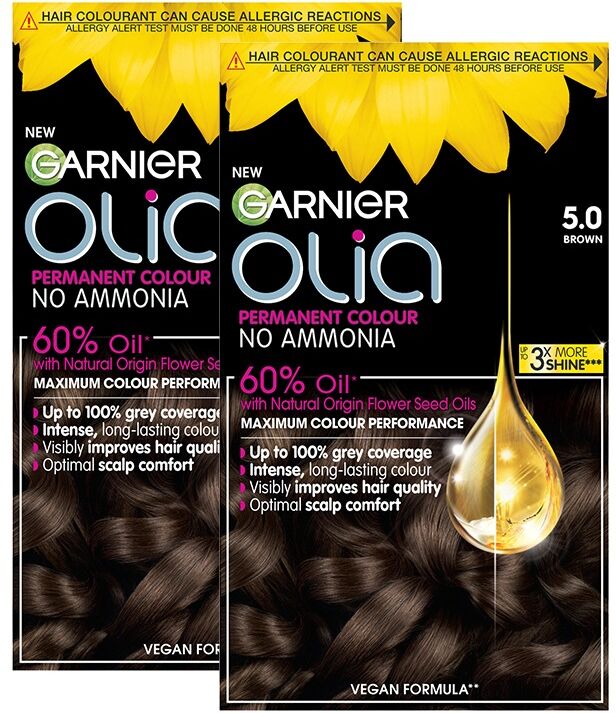
Garnier Olia Permanent Hair Dye No Ammonia Long Lasting 5.0 Brown DoubExperience the revolution of at-home hair coloring with Garnier Olia 5.0 Brown No Ammonia Permanent Hair Dye, featuring a powerful 60% oil-powered formula rich in natural flower oils to maximize your brown hair color result without the harsh scent of ammonia. This premium, permanent brown hair dye delivers maximum color performance for lavish, vivid, and long-lasting results, ensuring up to 100% grey hair coverage. More than just color, Olia visibly improves hair quality, making hair 3x shinier and up to 35% smoother**, while nourishing and protecting against dryness. Enjoy the unique, comfortable, and easy sensorial application thanks to its non-drip, smooth velvety texture and delicate floral fragrance, making this the perfect choice for intense, even, and beautifully reflective brown hair color at home. Ingredients: DEVELOPER CREAM: AQUA / WATER ‚ PARAFFINUM LIQUIDUM/MINERAL OIL ‚ HYDROGEN PEROXIDE‚CETEARYLALCOHOL‚SODIUMCETEARYL SULFATE‚SODIUMSALICYLATE‚SODIUMSULFATE ‚ PEG-40 HYDROGENATED CASTOROIL ‚ PHOSPHORICACID ‚ TETRASODIUMETIDRONATE ‚ TETRASODIUMPYROPHOSPHATE. (F.I.L. C199905/1). 1257557 A - COLOURANT CREAM: PARAFFINUM LIQUIDUM / MINERAL OIL ‚ AQUA / WATER ‚ ETHANOLAMINE ‚ DECYL GLUCOSIDE ‚ SODIUM LAURYL SULFATE ‚ PEG-40 HYDROGENATED CASTOR OIL ‚ m-AMINOPHENOL ‚ 2-AMINO-3-HYDROXYPYRIDINE‚ASCORBICACID‚TOCOPHEROL‚HYDROXYPROPYLGUAR‚ HYDROXYBENZOMORPHOLINE ‚ SODIUM METABISULFITE ‚ HYDROXYETHYL-3,4-METHYLENEDIOXYANILINE HCL ‚ 6-HYDROXYINDOLE ‚ THIOGLYCERIN ‚ TOLUENE-2,5-DIAMINE ‚ HELIANTHUS ANNUUS SEED OIL / SUNFLOWER SEED OIL ‚ CAMELLIA OLEIFERA SEED OIL ‚ N,N-BIS(2-HYDROXYETHYL)-p-PHENYLENEDIAMINE SULFATE ‚ DISODIUM COCOAMPHODIACETATE ‚ EDTA ‚ 2,4-DIAMINOPHENOXYETHANOL HCL ‚ PARFUM / FRAGRANCE. (F.I.L. Z290794/1). 1119728 B - SILICONE-FREE AFTER COLOUR CARE: AQUA / WATER‚CETEARYLALCOHOL‚BEHENTRIMONIUM CHLORIDE ‚ CETYL ESTERS ‚ CAMELLIA OLEIFERA SEED OIL ‚ HELIANTHUS ANNUUS SEED OIL / SUNFLOWER SEED OIL ‚ COCOS NUCIFERAOIL / COCONUTOIL ‚ DILAURYL THIODIPROPIONATE ‚ POTASSIUM HYDROXIDE ‚ ISOPROPYL ALCOHOL ‚ TOCOPHEROL ‚ BENZOIC ACID ‚ PARFUM/ FRAGRANCE.(F.I.L. Z282167/1).20,00 £*Shipping: 2,95 £Secure redirect to the provider
-
Is ammonia a salt?
No, ammonia is not a salt. Ammonia is a compound made up of nitrogen and hydrogen atoms, with the chemical formula NH3. It is a colorless gas with a characteristic pungent odor. On the other hand, salts are ionic compounds made up of positively and negatively charged ions, such as sodium chloride (table salt) or potassium nitrate. **
-
Does ammonia kill lice?
Yes, ammonia can kill lice. Ammonia is a strong alkaline compound that can be effective in killing lice and their eggs. However, it is important to use caution when using ammonia on the scalp as it can be irritating to the skin and eyes. It is recommended to consult with a healthcare professional before using ammonia or any other chemical treatment for lice. **
-
How is ammonia produced?
Ammonia is produced through the Haber-Bosch process, which involves combining nitrogen and hydrogen gases under high pressure and temperature in the presence of a catalyst, typically iron. The nitrogen is usually obtained from the air through a process called air separation, while the hydrogen is typically obtained from natural gas through a process called steam reforming. The reaction between nitrogen and hydrogen produces ammonia, which can then be further processed and purified for various industrial uses, such as fertilizer production. **
-
What is the difference between hair dyes with ammonia and without ammonia?
Hair dyes with ammonia typically provide longer-lasting and more vibrant color results, as ammonia helps to open the hair cuticle and allows the dye to penetrate deeply into the hair shaft. However, ammonia can also cause damage to the hair and scalp, leading to dryness and irritation. On the other hand, hair dyes without ammonia are gentler on the hair and scalp, making them a better option for individuals with sensitive skin or those looking to minimize damage to their hair. However, the color results may not be as long-lasting or intense as those achieved with ammonia-based dyes. **
* All prices are inclusive of VAT and, if applicable, plus shipping costs. The offer information is based on the details provided by the respective shop and is updated through automated processes. Real-time updates do not occur, so deviations can occur in individual cases. ** Note: Parts of this content were created by AI.