Buy screenwriting.eu ?
We are moving the project
screenwriting.eu .
Are you interested in purchasing the domain
screenwriting.eu ?
domain@kv-gmbh.de · 0541-91531010
Buy screenwriting.eu ?
What is the difference between interrole conflict and intrarole conflict?
Interrole conflict occurs when the expectations of different roles a person holds are in conflict with each other. For example, a person may experience interrole conflict when the demands of their work role conflict with the demands of their family role. On the other hand, intrarole conflict occurs when the expectations within a single role are in conflict with each other. For instance, a manager may experience intrarole conflict when they are torn between being supportive and being assertive with their team members. In summary, interrole conflict involves conflicts between different roles, while intrarole conflict involves conflicts within a single role. **
What is the difference between a conflict and a social conflict?
A conflict is a general term that refers to any disagreement or struggle between two or more parties. It can be personal, professional, or societal in nature. On the other hand, a social conflict specifically refers to a disagreement or struggle between different social groups or classes within a society. Social conflicts often involve issues related to power, resources, and social inequality, and they can have a significant impact on the functioning of a society as a whole. **

Similar search terms for Difference
Top-Angebote
Products related to Difference:
-
Penguin Never Split the Difference: Negotiating as if Your Life Depended on ItA former FBI hostage negotiator offers a new, field-tested approach to - effective in any situation.'Riveting' Adam Grant'Stupendous' The Week'Brilliant' GuardianAfter a stint policing the rough streets of Kansas City, Missouri, Chris Voss joined the FBI, where his career as a kidnapping negotiator brought him face-to-face with bank robbers, gang leaders and terrorists. Never Split the Difference takes you inside his world of high-stakes negotiations, revealing the nine key principles that helped Voss and his colleagues succeed when it mattered the most - when people's lives were at stake.Rooted in the real-life experiences of an intelligence professional at the top of his game, Never Split the Difference will give you the competitive edge in any discussion. PRAISE FOR NEVER SPLIT THE DIFFERENCE'My pick for book of the year.' Forbes'Who better to learn [negotiation] from than Chris Voss, whose skills have saved lives and averted disaster?' Daily Mail'Filled with insights that apply to everyday negotiations.' Business Insider'It's rare that a book is so gripping and entertaining while still being actionable and applicable.' Inc.'A business book you won't be able to put down.' Fortune7,99 £*Shipping: 2,99 £Secure redirect to the provider
-
Random House Books/Vermilion Never Split the Difference and Atomic Habits 2 Books Collection SetNever Split the Difference and Atomic Habits 2 Books Collection Set Description Never Split the Difference: Negotiating as if Your Life Depended on It THE HUGE INTERNATIONAL BESTSELLERA former FBI hostage negotiator offers a field-tested approach to negotiating - effective in any situation. 'Riveting' Adam Grant'Stupendous' The Week'Brilliant' After a stint policing the rough streets of Kansas City, Missouri, Chris Voss joined the FBI, where his career as a kidnapping negotiator brought him face-to-face with bank robbers, gang leaders and terrorists. Never Split the Difference takes you inside his world of high-stakes negotiations, revealing the nine key principles that helped Voss and his colleagues succeed when it mattered the most - when people's lives were at stake. Rooted in the real-life experiences of an intelligence professional at the top of his game, Never Split the Difference will give you the competitive edge in any discussion PRAISE FOR NEVER SPLIT THE DIFFERENCE'Such a great book that is relevant to more than just FBI negotiations: it's relevant to my relationship with my partner, to my business, to everything in between.' Steven Bartlett, entrepreneur and host of the Diary of a CEO podcast'It's rare that a book is so gripping and entertaining while still being actionable and applicable.' Inc. 'A business book you won't be able to put down.' Fortune Atomic Habits: the life-changing million-copy #1 bestseller THE PHENOMENAL INTERNATIONAL BESTSELLER: OVER 15 MILLION COPIES SOLD WORLDWIDETransform your life with tiny changes in behaviour, starting now. People think that when you want to change your life, you need to think big. But world-renowned habits expert James Clear has discovered another way. He knows that real change comes from the compound effect of hundreds of small decisions: doing two push-ups a day, waking up five minutes early, or holding a single short phone call. He calls them atomic habits. In this ground-breaking book, Clears reveals exactly how these minuscule changes can grow into such life-altering outcomes. He uncovers a handful of simple life hacks (the forgotten art of Habit Stacking, the unexpected power of the Two Minute Rule, or the trick to entering the Goldilocks Zone), and delves into cutting-edge psychology and neuroscience to explain why they matter. Along the way, he tells inspiring stories of Olympic gold medalists, leading CEOs, and distinguished scientists who have used the science of tiny habits to stay productive, motivated, and happy. These small changes will have a revolutionary effect on your career, your relationships, and your life.14,99 £*Shipping: 2,99 £Secure redirect to the provider
-
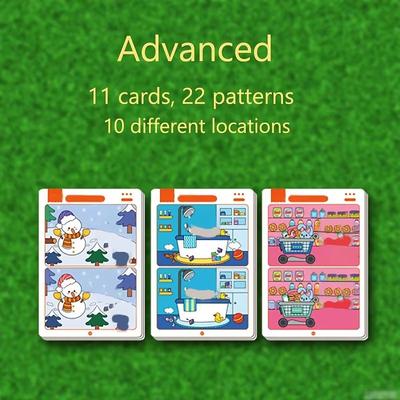
Inspired Finds Reusable Find The Difference Game Wipe Clean Activity Cards For Kids Focus And Attention Training seniorThese reusable wipeclean cards turn quiet time into a confidencebuilding challenge that kids actually enjoy. Designed as an attention training game, each page invites children to spot mistakes, differences, or hidden details while practicing...34,99 $*Shipping: 0,00 $Secure redirect to the provider
-
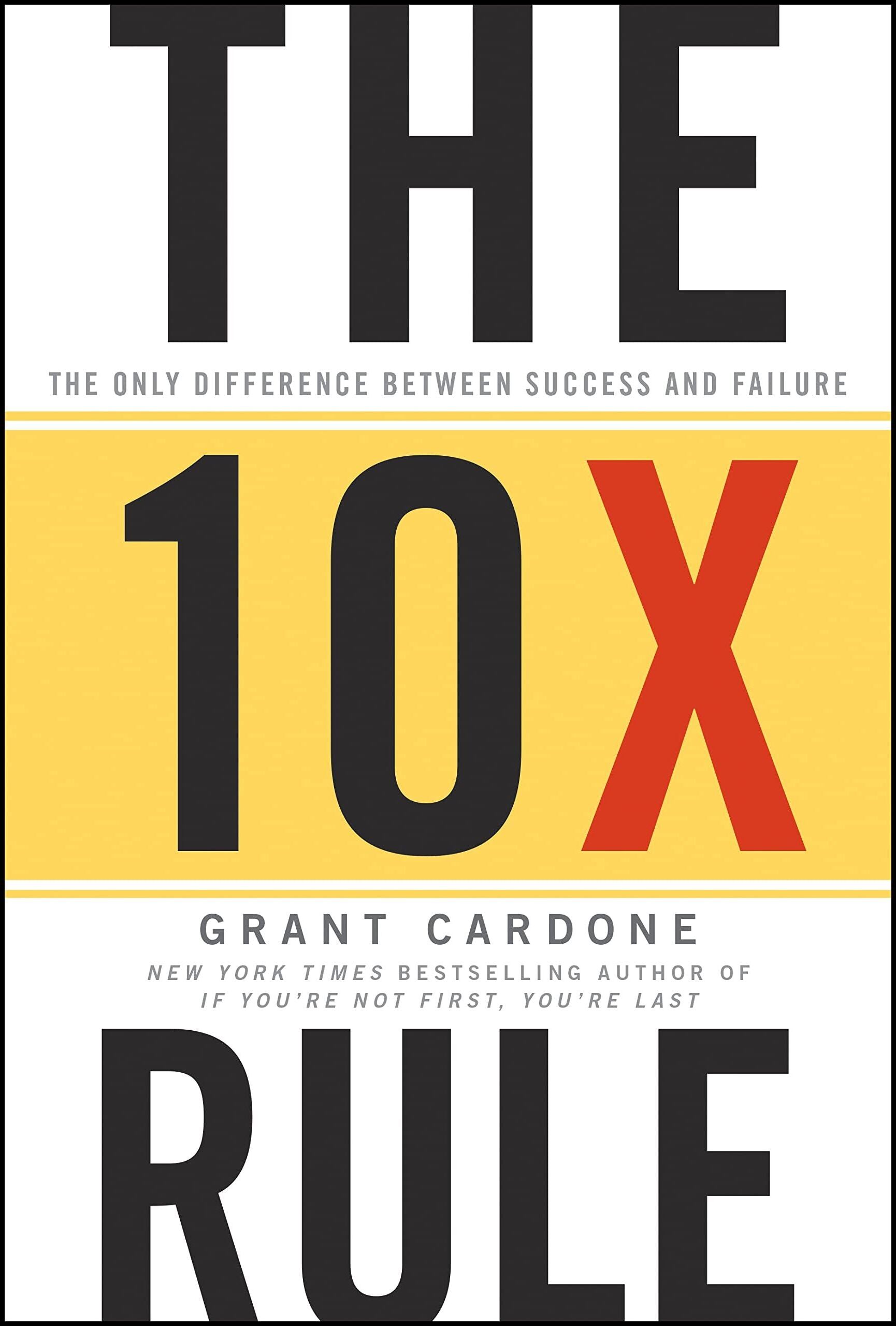
Wiley The 10X Rule: The Only Difference Between Success and Failure by Grant Cardone Motivation, Business & Self-Improvement BestsellerAchieve "Massive Action" results and accomplish your business dreams! While most people operate with only three degrees of action-no action, retreat, or normal action-if you're after big goals, you don't want to settle for the ordinary. To reach the next level, you must understand the coveted 4th degree of action. This 4th degree, also know as the 10 X Rule, is that level of action that guarantees companies and individuals realize their goals and dreams. The 10 X Rule unveils the principle of "Massive Action," allowing you to blast through business clichés and risk-aversion while taking concrete steps to reach your dreams. It also demonstrates why people get stuck in the first three actions and how to move into making the 10X Rule a discipline. Find out exactly where to start, what to do, and how to follow up each action you take with more action to achieve Massive Action results. Learn the "Estimation of Effort" calculation to ensure you exceed your targets Make the Fourth Degree a way of life and defy mediocrity Discover the time management myth Get the exact reasons why people fail and others succeed Know the exact formula to solve problems Extreme success is by definition outside the realm of normal action. Instead of behaving like everybody else and settling for average results, take Massive Action with The 10 X Rule, remove luck and chance from your business equation, and lock in massive success.15,99 £*Shipping: 2,99 £Secure redirect to the provider


-
What is the difference between a difference of opinion and a conflict?
A difference of opinion refers to a situation where individuals have varying viewpoints or beliefs on a particular matter, but they can discuss and respect each other's perspectives without it escalating into a conflict. On the other hand, a conflict arises when there is a disagreement that leads to tension, hostility, or a breakdown in communication between parties. Conflicts often involve strong emotions, power struggles, and can have a negative impact on relationships if not resolved effectively. **
-
What is the difference between a dot plot and a scatter plot?
A dot plot is a simple way to display individual data points along a number line, with each data point represented by a dot. It is used to show the distribution of a single variable. On the other hand, a scatter plot is used to display the relationship between two variables by plotting individual data points on a two-dimensional graph. In a scatter plot, each data point is represented by a dot, and the pattern of the dots can reveal the nature of the relationship between the variables, such as a positive, negative, or no correlation. Overall, the main difference is that a dot plot displays the distribution of a single variable, while a scatter plot displays the relationship between two variables. **
-
What is the difference between a garden plot and a house plot?
A garden plot is a designated area of land used for growing plants, flowers, and vegetables. It is typically smaller in size and is often found in a community garden or backyard. A house plot, on the other hand, refers to the land on which a house is built. It is usually larger in size and may include the house, yard, and other outdoor amenities. While a garden plot is primarily used for gardening purposes, a house plot serves as the foundation for a residential dwelling. **
-
What is the difference between an evaluation conflict, a relationship conflict, and a distribution conflict?
An evaluation conflict arises when there are differing opinions on the quality or effectiveness of work or ideas. This type of conflict is focused on the merit of the work itself. Relationship conflicts, on the other hand, involve interpersonal tensions and issues between individuals, often unrelated to the work itself. Distribution conflicts occur when there are disagreements over the allocation of resources, such as money, time, or responsibilities. Each type of conflict requires different approaches and strategies for resolution. **


What is the difference between an intrarole conflict and an interrole conflict?
Intrarole conflict occurs when an individual experiences conflicting demands within a single role, such as when a manager is torn between two equally important tasks. On the other hand, interrole conflict arises when there are conflicting demands between different roles an individual occupies, like when a person struggles to balance their responsibilities as a parent and as an employee. Essentially, intrarole conflict involves conflicts within a specific role, while interrole conflict involves conflicts between different roles. **
What is the difference between content and plot?
Content refers to the overall subject matter, themes, and ideas explored in a story, while plot refers to the sequence of events that make up the story. Content focuses on the underlying messages and emotions conveyed, while plot focuses on the specific actions and events that drive the narrative forward. In essence, content is the substance of the story, while plot is the structure that holds it together. **
Top-Angebote
Products related to Difference:
-
Thirstystone Make a Difference 4 Pack Tumbled Tile CoasterABSORBENT STONE-Coasters arrive as a set of 4 Coasters. Each Coaster is constructed of absorbent stone that continuously absorbs drips and condensation from your beverages while preventing stains and rings on your furniture.29,99 $*Shipping: 0,00 $Secure redirect to the provider
-
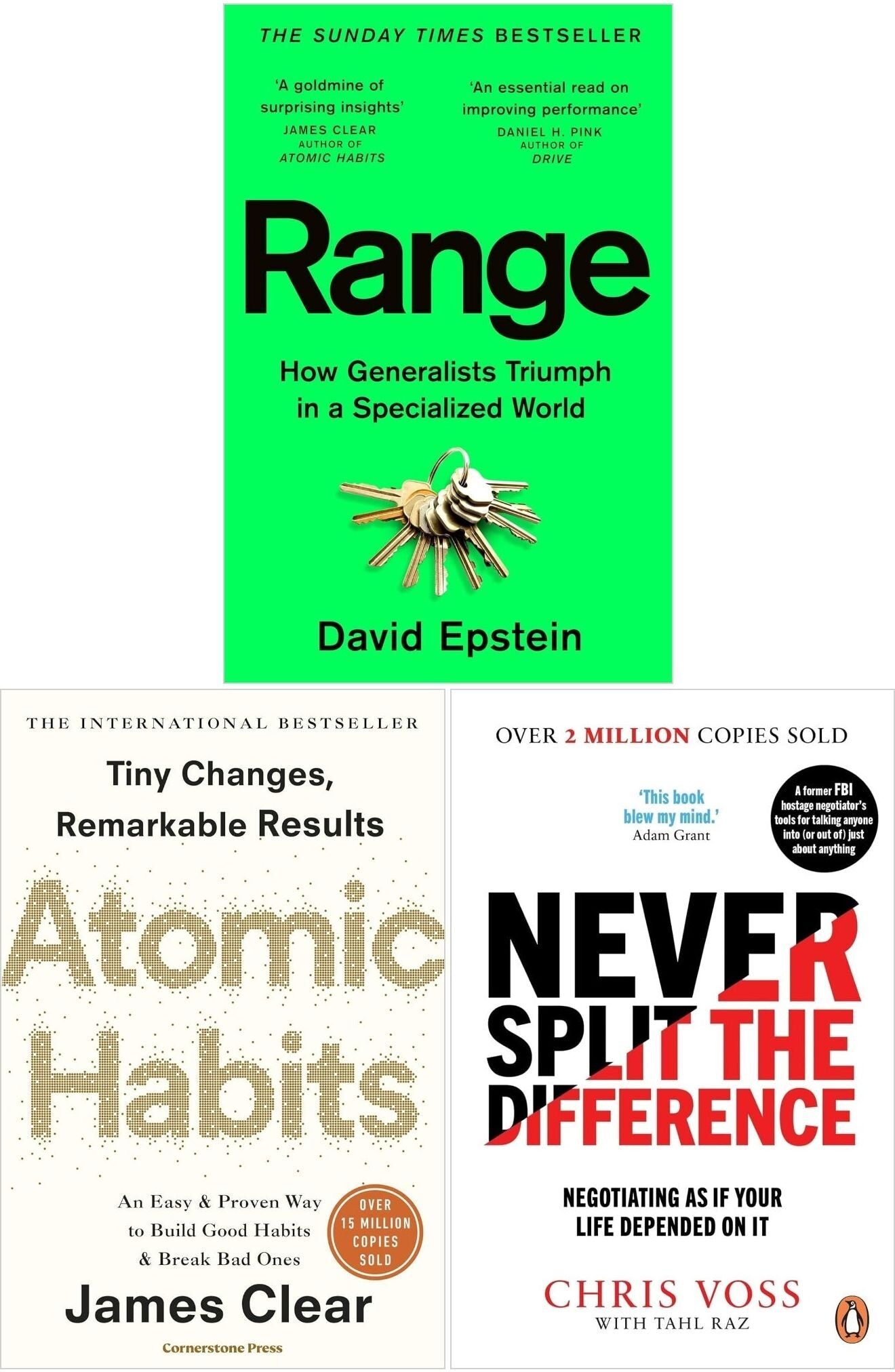
Penguin Range, Never Split the Difference and Atomic Habits 3 Books SetRange In this landmark book, David Epstein shows you that the way to succeed is by sampling widely, gaining a breadth of experiences, taking detours, experimenting relentlessly, juggling many interests – in other words, by developing range. Studying the world's most successful athletes, artists, musicians, inventors and scientists, Epstein demonstrates why in most fields – especially those that are complex and unpredictable – generalists, not specialists are primed to excel. No matter what you do, where you are in life, whether you are a teacher, student, scientist, business analyst, parent, job hunter, retiree, you will see the world differently after you've read Range. You'll understand better how we solve problems, how we learn and how we succeed. You'll see why failing a test is the best way to learn and why frequent quitters end up with the most fulfilling careers. Never Split the Difference After a stint policing the rough streets of Kansas City, Missouri, Chris Voss joined the FBI, where his career as a kidnapping negotiator brought him face-to-face with bank robbers, gang leaders and terrorists. Never Split the Difference takes you inside his world of high-stakes negotiations, revealing the nine key principles that helped Voss and his colleagues succeed when it mattered the most - when people's lives were at stake. Rooted in the real-life experiences of an intelligence professional at the top of his game, Never Split the Difference will give you the competitive edge in any discussion. Atomic Habits Transform your life with tiny changes in behaviour, starting now. People think that when you want to change your life, you need to think big. But world-renowned habits expert James Clear has discovered another way. He knows that real change comes from the compound effect of hundreds of small decisions: doing two push-ups a day, waking up five minutes early, or holding a single short phone call. He calls them atomic habits. In this ground-breaking book, Clears reveals exactly how these minuscule changes can grow into such life-altering outcomes.14,99 £*Shipping: 2,99 £Secure redirect to the provider
-
Penguin Never Split the Difference: Negotiating as if Your Life Depended on ItA former FBI hostage negotiator offers a new, field-tested approach to - effective in any situation.'Riveting' Adam Grant'Stupendous' The Week'Brilliant' GuardianAfter a stint policing the rough streets of Kansas City, Missouri, Chris Voss joined the FBI, where his career as a kidnapping negotiator brought him face-to-face with bank robbers, gang leaders and terrorists. Never Split the Difference takes you inside his world of high-stakes negotiations, revealing the nine key principles that helped Voss and his colleagues succeed when it mattered the most - when people's lives were at stake.Rooted in the real-life experiences of an intelligence professional at the top of his game, Never Split the Difference will give you the competitive edge in any discussion. PRAISE FOR NEVER SPLIT THE DIFFERENCE'My pick for book of the year.' Forbes'Who better to learn [negotiation] from than Chris Voss, whose skills have saved lives and averted disaster?' Daily Mail'Filled with insights that apply to everyday negotiations.' Business Insider'It's rare that a book is so gripping and entertaining while still being actionable and applicable.' Inc.'A business book you won't be able to put down.' Fortune7,99 £*Shipping: 2,99 £Secure redirect to the provider
-
Random House Books/Vermilion Never Split the Difference and Atomic Habits 2 Books Collection SetNever Split the Difference and Atomic Habits 2 Books Collection Set Description Never Split the Difference: Negotiating as if Your Life Depended on It THE HUGE INTERNATIONAL BESTSELLERA former FBI hostage negotiator offers a field-tested approach to negotiating - effective in any situation. 'Riveting' Adam Grant'Stupendous' The Week'Brilliant' After a stint policing the rough streets of Kansas City, Missouri, Chris Voss joined the FBI, where his career as a kidnapping negotiator brought him face-to-face with bank robbers, gang leaders and terrorists. Never Split the Difference takes you inside his world of high-stakes negotiations, revealing the nine key principles that helped Voss and his colleagues succeed when it mattered the most - when people's lives were at stake. Rooted in the real-life experiences of an intelligence professional at the top of his game, Never Split the Difference will give you the competitive edge in any discussion PRAISE FOR NEVER SPLIT THE DIFFERENCE'Such a great book that is relevant to more than just FBI negotiations: it's relevant to my relationship with my partner, to my business, to everything in between.' Steven Bartlett, entrepreneur and host of the Diary of a CEO podcast'It's rare that a book is so gripping and entertaining while still being actionable and applicable.' Inc. 'A business book you won't be able to put down.' Fortune Atomic Habits: the life-changing million-copy #1 bestseller THE PHENOMENAL INTERNATIONAL BESTSELLER: OVER 15 MILLION COPIES SOLD WORLDWIDETransform your life with tiny changes in behaviour, starting now. People think that when you want to change your life, you need to think big. But world-renowned habits expert James Clear has discovered another way. He knows that real change comes from the compound effect of hundreds of small decisions: doing two push-ups a day, waking up five minutes early, or holding a single short phone call. He calls them atomic habits. In this ground-breaking book, Clears reveals exactly how these minuscule changes can grow into such life-altering outcomes. He uncovers a handful of simple life hacks (the forgotten art of Habit Stacking, the unexpected power of the Two Minute Rule, or the trick to entering the Goldilocks Zone), and delves into cutting-edge psychology and neuroscience to explain why they matter. Along the way, he tells inspiring stories of Olympic gold medalists, leading CEOs, and distinguished scientists who have used the science of tiny habits to stay productive, motivated, and happy. These small changes will have a revolutionary effect on your career, your relationships, and your life.14,99 £*Shipping: 2,99 £Secure redirect to the provider
-
What is the difference between interrole conflict and intrarole conflict?
Interrole conflict occurs when the expectations of different roles a person holds are in conflict with each other. For example, a person may experience interrole conflict when the demands of their work role conflict with the demands of their family role. On the other hand, intrarole conflict occurs when the expectations within a single role are in conflict with each other. For instance, a manager may experience intrarole conflict when they are torn between being supportive and being assertive with their team members. In summary, interrole conflict involves conflicts between different roles, while intrarole conflict involves conflicts within a single role. **
-
What is the difference between a conflict and a social conflict?
A conflict is a general term that refers to any disagreement or struggle between two or more parties. It can be personal, professional, or societal in nature. On the other hand, a social conflict specifically refers to a disagreement or struggle between different social groups or classes within a society. Social conflicts often involve issues related to power, resources, and social inequality, and they can have a significant impact on the functioning of a society as a whole. **
-
What is the difference between a difference of opinion and a conflict?
A difference of opinion refers to a situation where individuals have varying viewpoints or beliefs on a particular matter, but they can discuss and respect each other's perspectives without it escalating into a conflict. On the other hand, a conflict arises when there is a disagreement that leads to tension, hostility, or a breakdown in communication between parties. Conflicts often involve strong emotions, power struggles, and can have a negative impact on relationships if not resolved effectively. **
-
What is the difference between a dot plot and a scatter plot?
A dot plot is a simple way to display individual data points along a number line, with each data point represented by a dot. It is used to show the distribution of a single variable. On the other hand, a scatter plot is used to display the relationship between two variables by plotting individual data points on a two-dimensional graph. In a scatter plot, each data point is represented by a dot, and the pattern of the dots can reveal the nature of the relationship between the variables, such as a positive, negative, or no correlation. Overall, the main difference is that a dot plot displays the distribution of a single variable, while a scatter plot displays the relationship between two variables. **
Similar search terms for Difference
-
Inspired Finds Reusable Find The Difference Game Wipe Clean Activity Cards For Kids Focus And Attention Training seniorThese reusable wipeclean cards turn quiet time into a confidencebuilding challenge that kids actually enjoy. Designed as an attention training game, each page invites children to spot mistakes, differences, or hidden details while practicing...34,99 $*Shipping: 0,00 $Secure redirect to the provider
-
Wiley The 10X Rule: The Only Difference Between Success and Failure by Grant Cardone Motivation, Business & Self-Improvement BestsellerAchieve "Massive Action" results and accomplish your business dreams! While most people operate with only three degrees of action-no action, retreat, or normal action-if you're after big goals, you don't want to settle for the ordinary. To reach the next level, you must understand the coveted 4th degree of action. This 4th degree, also know as the 10 X Rule, is that level of action that guarantees companies and individuals realize their goals and dreams. The 10 X Rule unveils the principle of "Massive Action," allowing you to blast through business clichés and risk-aversion while taking concrete steps to reach your dreams. It also demonstrates why people get stuck in the first three actions and how to move into making the 10X Rule a discipline. Find out exactly where to start, what to do, and how to follow up each action you take with more action to achieve Massive Action results. Learn the "Estimation of Effort" calculation to ensure you exceed your targets Make the Fourth Degree a way of life and defy mediocrity Discover the time management myth Get the exact reasons why people fail and others succeed Know the exact formula to solve problems Extreme success is by definition outside the realm of normal action. Instead of behaving like everybody else and settling for average results, take Massive Action with The 10 X Rule, remove luck and chance from your business equation, and lock in massive success.15,99 £*Shipping: 2,99 £Secure redirect to the provider
-
Uplifted Goods Character Theme LED Digital Timepiece For Children fEstablish a high level of personal time management with this High Performance Youth Chronographic Hub. Engineered with a Reinforced Polymeric Structural Shield and a specialized characterthemed frame, this watch is designed to provide a definitive...34,97 $*Shipping: 0,00 $Secure redirect to the provider
-
Inspired Finds Reusable Find The Difference Game Wipe Clean Activity Cards For Kids Focus And Attention Training intermediateThese reusable wipeclean cards turn quiet time into a confidencebuilding challenge that kids actually enjoy. Designed as an attention training game, each page invites children to spot mistakes, differences, or hidden details while practicing...34,99 $*Shipping: 0,00 $Secure redirect to the provider
-
What is the difference between a garden plot and a house plot?
A garden plot is a designated area of land used for growing plants, flowers, and vegetables. It is typically smaller in size and is often found in a community garden or backyard. A house plot, on the other hand, refers to the land on which a house is built. It is usually larger in size and may include the house, yard, and other outdoor amenities. While a garden plot is primarily used for gardening purposes, a house plot serves as the foundation for a residential dwelling. **
-
What is the difference between an evaluation conflict, a relationship conflict, and a distribution conflict?
An evaluation conflict arises when there are differing opinions on the quality or effectiveness of work or ideas. This type of conflict is focused on the merit of the work itself. Relationship conflicts, on the other hand, involve interpersonal tensions and issues between individuals, often unrelated to the work itself. Distribution conflicts occur when there are disagreements over the allocation of resources, such as money, time, or responsibilities. Each type of conflict requires different approaches and strategies for resolution. **
-
What is the difference between an intrarole conflict and an interrole conflict?
Intrarole conflict occurs when an individual experiences conflicting demands within a single role, such as when a manager is torn between two equally important tasks. On the other hand, interrole conflict arises when there are conflicting demands between different roles an individual occupies, like when a person struggles to balance their responsibilities as a parent and as an employee. Essentially, intrarole conflict involves conflicts within a specific role, while interrole conflict involves conflicts between different roles. **
-
What is the difference between content and plot?
Content refers to the overall subject matter, themes, and ideas explored in a story, while plot refers to the sequence of events that make up the story. Content focuses on the underlying messages and emotions conveyed, while plot focuses on the specific actions and events that drive the narrative forward. In essence, content is the substance of the story, while plot is the structure that holds it together. **
* All prices are inclusive of VAT and, if applicable, plus shipping costs. The offer information is based on the details provided by the respective shop and is updated through automated processes. Real-time updates do not occur, so deviations can occur in individual cases. ** Note: Parts of this content were created by AI.