Buy screenwriting.eu ?
We are moving the project
screenwriting.eu .
Are you interested in purchasing the domain
screenwriting.eu ?
domain@kv-gmbh.de · 0541-91531010
Buy screenwriting.eu ?
'How do I properly structure the algorithm?'
To properly structure an algorithm, you should start by clearly defining the problem and understanding the input and output requirements. Then, break down the problem into smaller, manageable steps and organize them in a logical sequence. Use clear and descriptive variable names and comments to explain the purpose of each step. Test the algorithm with different inputs to ensure it produces the correct output. Finally, optimize the algorithm if necessary to improve its efficiency. **
Which algorithm is better for a navigation software, the brute-force algorithm or the Dijkstra algorithm?
The Dijkstra algorithm is better for a navigation software compared to the brute-force algorithm. The Dijkstra algorithm is specifically designed for finding the shortest path in a graph, making it well-suited for navigation purposes. It efficiently calculates the shortest path from a starting point to all other points in the graph, which is essential for navigation software. On the other hand, the brute-force algorithm is not optimized for finding the shortest path and can be inefficient for large graphs, making it less suitable for navigation software. **


Similar search terms for Algorithm
Top-Angebote
Products related to Algorithm:
-
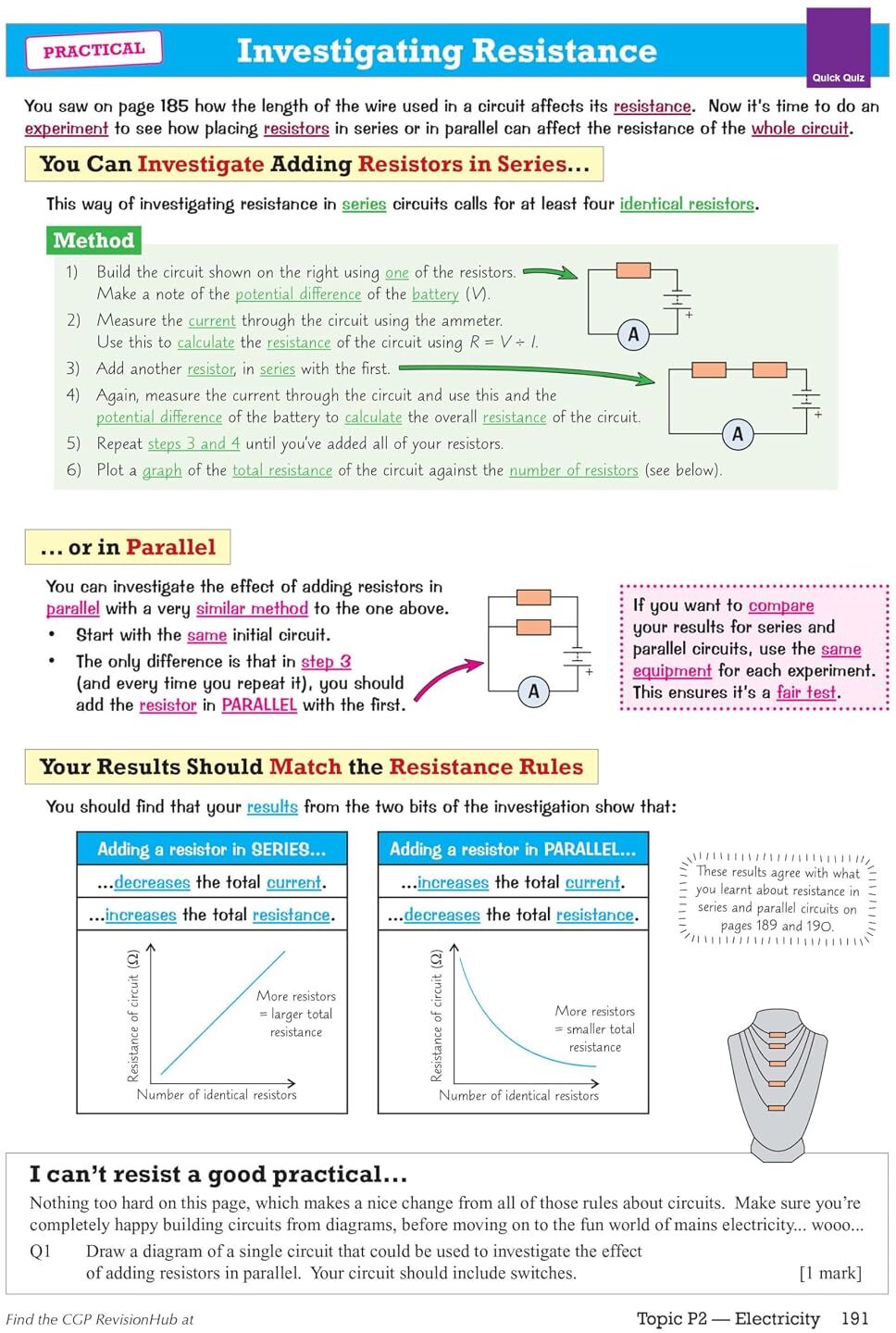
CGP Books CGP GCSE Combined Science AQA Revision Bundle – Revision Guide & WorkbookCGP Books are simply the best for revision! This fantastic GCSE Combined Science bundle has everything you need to ace the AQA Higher Level exams. There are detailed notes for every topic in the Revision Guide, plenty of exam-style questions, as well as loads more online revision in CGP RevisionHub to use alongside your book! GCSE Combined Science AQA Higher Revision Guide with CGP RevisionHub (9781782945598) GCSE Combined Science AQA Higher Exam Practice Workbook with CGP RevisionHub (9781789087543) GCSE Combined Science AQA Higher Level Revision Guide with CGP RevisionHub When it comes to Grade 9-1 GCSE Combined Science exam prep, nothing beats good old-fashioned practice. This Exam Practice Workbook is bursting with realistic exam-style questions for the entire AQA course (Higher level), including coverage of Working Scientifically, AO3 practical skills and all the required practical activities. Every question is labelled with a grade, so it's easy for students to tailor their practice for their target grade or focus on the tough stuff! Detailed step-by-step answers are included at the back of the book. What's more, we've also put together some free "What to Expect in the Exam" information, available via a link in the book! GCSE Combined Science AQA Higher Level Exam Practice Workbook with CGP RevisionHub This brilliant CGP Exam Practice Workbook is the perfect way to put all your AQA GCSE Combined Science knowledge to the test. It covers the entire Higher Level course and also comes with lots of online revision in the brand new CGP RevisionHub. In the book, there are: Exam-style questions for realistic practice on every topic, including the required practicals Detailed answers to mark your work In CGP RevisionHub, you'll find: An Online Workbook with all the questions from your book that you can filter by paper or topic, plus progress trackers to see how you’re getting on Video Solutions to help you scoop up every last mark Quick Quizzes to test yourself on the maths skills you’ll need for the exams And more — wow! When your book arrives, just use the unique code printed inside the front cover to access your online revision.22,99 £*Shipping: 2,99 £Secure redirect to the provider
-
CGP Books CGP GCSE Maths Edexcel Revision Bundle – Revision Guide, Workbook & 10-Minute TestsCGP Books are simply the best for revision! This brilliant Edexcel GCSE Maths bundle has everything kids need for exam success. It contains three books full of revision and practice — all perfectly tailored to the Higher level. GCSE Maths Edexcel Revision Guide — Higher (9781782944041) GCSE Maths Edexcel 10-Minute Tests — Higher (9781789081312) GCSE Maths Edexcel Exam Practice Workbook — Higher (9781782944034) GCSE Maths Edexcel Revision Guide — Higher Our Higher Level GCSE Maths Revision Guide for the Edexcel course is packed with concise, student-friendly explanations of every topic, backed up with plenty of step-by-step examples, in CGP's clear informal and (dare we say) humorous style. We've also included helpful grade stamps to show the difficulty level of each topic, alongside plenty of exam-style questions with answers at the back! QR codes throughout give quick and easy access to worked video solutions from our in-house experts, plus a selection of challenging online quizzes! GCSE Maths Edexcel 10-Minute Tests — Higher This Edexcel Grade 9-1 GCSE Higher Maths book is packed with quick-fire tests, all at the perfect difficulty for students aiming for those high grades. It consists of over thirty bite-sized tests, containing a range of topics, calculator and non-calculator questions, plus those tricky problem solving questions. CGP’s 10-Minute Test books are absolutely perfect for short bursts of confidence-building exam-practice, so students are fully prepared on the big day. Answers and mark schemes are included, for easy marking and progress tracking. GCSE Maths Edexcel Exam Practice Workbook — Higher Packed with exam-style questions plus scaffolded answers and helpful tips – perfect for guided practice. This Higher Level Edexcel GCSE Maths Exam Practice Workbook contains a huge range of realistic exam-style questions for every topic, with grade stamps to indicate the difficulty level and helpful tips for the trickier questions. Step-by-step solutions (with a full mark scheme) are included. The book is rounded off with a full set of realistic mock exam papers - the answers to these are available to download from the CGP website.18,99 £*Shipping: 2,99 £Secure redirect to the provider
-
CGP Books CGP GCSE Maths AQA Revision Bundle – Revision Guide, Workbook & 10-Minute TestsCGP Books are simply the best for revision! This brilliant AQA GCSE Maths bundle has everything kids need for exam success. It contains three books full of revision and practice — all perfectly tailored to the Higher level. GCSE Maths AQA Revision Guide — Higher (9781782943952) GCSE Maths AQA 10-Minute Tests — Higher (9781789081336) GCSE Maths AQA Exam Practice Workbook —Higher (9781782943945) GCSE Maths AQA Revision Guide: Higher Level Our Higher Level GCSE Maths Revision Guide for the AQA course is packed with concise, student-friendly explanations of every topic, backed up with plenty of step-by-step examples, in CGP's clear informal and (dare we say) humorous style. We've also included helpful grade stamps to show the difficulty level of each topic, alongside plenty of exam-style questions with answers at the back! QR codes throughout give quick and easy access to worked video solutions from our in-house experts, plus a selection of challenging online quizzes! GCSE Maths AQA Exam Practice Workbook: Higher Level Packed with realistic exam-style questions for every topic, this newly updated Exam Practice Workbook is perfectly matched to the Higher Level AQA GCSE Maths course. Handy grade stamps indicate the difficulty level of each question, and problem-solving stamps those that require a bit of extra thought. There are also plenty of helpful exam tips throughout the book. Plus, it comes with complete step-by-step solutions (with a full mark scheme) at the back of the book, so it’s simple for students to check and correct their work – and there are even QR codes to access brilliant new worked video solutions! GCSE Mathematics AQA 10-Minute Tests - Higher Level This AQA Grade 9-1 GCSE Maths book is packed with quick-fire tests, all set at the perfect difficulty for students working at a Higher level (Grades 4-9). It consists of over thirty bite-sized tests, containing a range of topics, calculator and non-calculator questions, plus those tricky problem solving questions. CGP's 10-Minute Test books are absolutely perfect for short bursts of confidence-building exam-practice, so students are fully prepared on the big day! Answers and mark schemes are included, for easy marking and progress tracking. Sweet!18,99 £*Shipping: 2,99 £Secure redirect to the provider
-
Uplifted Goods Character Theme LED Digital Timepiece For Children dEstablish a high level of personal time management with this High Performance Youth Chronographic Hub. Engineered with a Reinforced Polymeric Structural Shield and a specialized characterthemed frame, this watch is designed to provide a definitive...34,97 $*Shipping: 0,00 $Secure redirect to the provider


-
What is the difference between algorithm, sequence, and control structure?
An algorithm is a step-by-step procedure for solving a problem or accomplishing a task. It is a set of instructions that can be followed to achieve a specific goal. A sequence refers to the order in which instructions or steps are executed within an algorithm. It is the specific arrangement of steps that must be followed in a particular order. Control structures, on the other hand, are the mechanisms used to determine the flow of execution within an algorithm. They include decision-making structures (such as if-else statements) and looping structures (such as for and while loops) that control the flow of the algorithm based on certain conditions. In summary, an algorithm is the overall plan, the sequence is the specific order of steps, and control structures determine how the steps are executed. **
-
What is Instagram's algorithm?
Instagram's algorithm is a complex system that determines the order in which posts appear on a user's feed. It takes into account various factors such as the user's interests, interactions, and relationships with other users. The algorithm prioritizes content that it believes the user will find most engaging, based on their past behavior on the platform. This means that not all posts from accounts a user follows will show up in their feed, as the algorithm aims to show the most relevant and interesting content to each individual user. **
-
What is an algorithm?
An algorithm is a step-by-step procedure or set of rules to be followed in problem-solving or decision-making. It is a finite sequence of well-defined, computer-implementable instructions typically used to solve a specific problem or perform a specific task. Algorithms are used in various fields such as computer science, mathematics, and engineering to automate processes and achieve desired outcomes efficiently. They are essential in programming and data analysis to manipulate and process data effectively. **
-
What does the structure chart for the Counting Sort algorithm look like?
The structure chart for the Counting Sort algorithm typically consists of three main modules: counting, summing, and placing. The counting module counts the frequency of each element in the input array. The summing module calculates the cumulative sum of the frequencies to determine the correct position of each element in the sorted array. Finally, the placing module assigns each element to its correct position in the output array based on the cumulative sum. Overall, the structure chart for Counting Sort illustrates a linear-time sorting algorithm that is efficient for sorting integers within a specific range. **


What does the structure chart for the Selection Sort algorithm look like?
The structure chart for the Selection Sort algorithm typically consists of a main module representing the entire sorting process. Within the main module, there are typically two sub-modules: one for finding the minimum element in the unsorted portion of the array, and another for swapping the minimum element with the first unsorted element. These sub-modules may also have further sub-modules for performing specific tasks such as comparing elements and updating the minimum element. Overall, the structure chart for the Selection Sort algorithm illustrates the flow of control and the hierarchy of tasks involved in the sorting process. **
What is the bubblesort algorithm?
The bubblesort algorithm is a simple sorting algorithm that repeatedly steps through the list to be sorted, compares each pair of adjacent items, and swaps them if they are in the wrong order. This process is repeated until the list is sorted. The algorithm gets its name because smaller elements "bubble" to the top of the list with each iteration. While bubblesort is easy to understand and implement, it is not very efficient for large lists as it has a time complexity of O(n^2). **
Top-Angebote
Products related to Algorithm:
-
Dr Irena Eris Algorithm filler eye cream for wrinkle correction 15 mlDr Irena Eris Algorithm, 15 ml, Eye Creams and Gels for Women, The eye area is a highly sensitive area, as the skin there is exceptionally thin and fragile, making it more susceptible to signs of fatigue and ageing. It therefore also requires special treatment with ingredients and consistencies designed exactly for its needs. The Dr Irena Eris Algorithm eye cream takes care of specific issues in the eye area. It delivers the nourishment and hydration needed for the skin around your eyes, improving its quality and restoring its vitality and a fresh, rested look. Characteristics: smooths wrinkles and fine lines evens skin tone and brightens it up beautifully gives the skin elasticity refreshes and softens the eye area How to use: In the morning and/or evening, apply the product around the eye contours by dabbing lightly until fully absorbed.34,50 £*Shipping: 3,99 £Secure redirect to the provider
-
Uplifted Goods Character Theme LED Digital Timepiece For Children eEstablish a high level of personal time management with this High Performance Youth Chronographic Hub. Engineered with a Reinforced Polymeric Structural Shield and a specialized characterthemed frame, this watch is designed to provide a definitive...34,97 $*Shipping: 0,00 $Secure redirect to the provider
-
CGP Books CGP GCSE Combined Science AQA Revision Bundle – Revision Guide & WorkbookCGP Books are simply the best for revision! This fantastic GCSE Combined Science bundle has everything you need to ace the AQA Higher Level exams. There are detailed notes for every topic in the Revision Guide, plenty of exam-style questions, as well as loads more online revision in CGP RevisionHub to use alongside your book! GCSE Combined Science AQA Higher Revision Guide with CGP RevisionHub (9781782945598) GCSE Combined Science AQA Higher Exam Practice Workbook with CGP RevisionHub (9781789087543) GCSE Combined Science AQA Higher Level Revision Guide with CGP RevisionHub When it comes to Grade 9-1 GCSE Combined Science exam prep, nothing beats good old-fashioned practice. This Exam Practice Workbook is bursting with realistic exam-style questions for the entire AQA course (Higher level), including coverage of Working Scientifically, AO3 practical skills and all the required practical activities. Every question is labelled with a grade, so it's easy for students to tailor their practice for their target grade or focus on the tough stuff! Detailed step-by-step answers are included at the back of the book. What's more, we've also put together some free "What to Expect in the Exam" information, available via a link in the book! GCSE Combined Science AQA Higher Level Exam Practice Workbook with CGP RevisionHub This brilliant CGP Exam Practice Workbook is the perfect way to put all your AQA GCSE Combined Science knowledge to the test. It covers the entire Higher Level course and also comes with lots of online revision in the brand new CGP RevisionHub. In the book, there are: Exam-style questions for realistic practice on every topic, including the required practicals Detailed answers to mark your work In CGP RevisionHub, you'll find: An Online Workbook with all the questions from your book that you can filter by paper or topic, plus progress trackers to see how you’re getting on Video Solutions to help you scoop up every last mark Quick Quizzes to test yourself on the maths skills you’ll need for the exams And more — wow! When your book arrives, just use the unique code printed inside the front cover to access your online revision.22,99 £*Shipping: 2,99 £Secure redirect to the provider
-
CGP Books CGP GCSE Maths Edexcel Revision Bundle – Revision Guide, Workbook & 10-Minute TestsCGP Books are simply the best for revision! This brilliant Edexcel GCSE Maths bundle has everything kids need for exam success. It contains three books full of revision and practice — all perfectly tailored to the Higher level. GCSE Maths Edexcel Revision Guide — Higher (9781782944041) GCSE Maths Edexcel 10-Minute Tests — Higher (9781789081312) GCSE Maths Edexcel Exam Practice Workbook — Higher (9781782944034) GCSE Maths Edexcel Revision Guide — Higher Our Higher Level GCSE Maths Revision Guide for the Edexcel course is packed with concise, student-friendly explanations of every topic, backed up with plenty of step-by-step examples, in CGP's clear informal and (dare we say) humorous style. We've also included helpful grade stamps to show the difficulty level of each topic, alongside plenty of exam-style questions with answers at the back! QR codes throughout give quick and easy access to worked video solutions from our in-house experts, plus a selection of challenging online quizzes! GCSE Maths Edexcel 10-Minute Tests — Higher This Edexcel Grade 9-1 GCSE Higher Maths book is packed with quick-fire tests, all at the perfect difficulty for students aiming for those high grades. It consists of over thirty bite-sized tests, containing a range of topics, calculator and non-calculator questions, plus those tricky problem solving questions. CGP’s 10-Minute Test books are absolutely perfect for short bursts of confidence-building exam-practice, so students are fully prepared on the big day. Answers and mark schemes are included, for easy marking and progress tracking. GCSE Maths Edexcel Exam Practice Workbook — Higher Packed with exam-style questions plus scaffolded answers and helpful tips – perfect for guided practice. This Higher Level Edexcel GCSE Maths Exam Practice Workbook contains a huge range of realistic exam-style questions for every topic, with grade stamps to indicate the difficulty level and helpful tips for the trickier questions. Step-by-step solutions (with a full mark scheme) are included. The book is rounded off with a full set of realistic mock exam papers - the answers to these are available to download from the CGP website.18,99 £*Shipping: 2,99 £Secure redirect to the provider
-
'How do I properly structure the algorithm?'
To properly structure an algorithm, you should start by clearly defining the problem and understanding the input and output requirements. Then, break down the problem into smaller, manageable steps and organize them in a logical sequence. Use clear and descriptive variable names and comments to explain the purpose of each step. Test the algorithm with different inputs to ensure it produces the correct output. Finally, optimize the algorithm if necessary to improve its efficiency. **
-
Which algorithm is better for a navigation software, the brute-force algorithm or the Dijkstra algorithm?
The Dijkstra algorithm is better for a navigation software compared to the brute-force algorithm. The Dijkstra algorithm is specifically designed for finding the shortest path in a graph, making it well-suited for navigation purposes. It efficiently calculates the shortest path from a starting point to all other points in the graph, which is essential for navigation software. On the other hand, the brute-force algorithm is not optimized for finding the shortest path and can be inefficient for large graphs, making it less suitable for navigation software. **
-
What is the difference between algorithm, sequence, and control structure?
An algorithm is a step-by-step procedure for solving a problem or accomplishing a task. It is a set of instructions that can be followed to achieve a specific goal. A sequence refers to the order in which instructions or steps are executed within an algorithm. It is the specific arrangement of steps that must be followed in a particular order. Control structures, on the other hand, are the mechanisms used to determine the flow of execution within an algorithm. They include decision-making structures (such as if-else statements) and looping structures (such as for and while loops) that control the flow of the algorithm based on certain conditions. In summary, an algorithm is the overall plan, the sequence is the specific order of steps, and control structures determine how the steps are executed. **
-
What is Instagram's algorithm?
Instagram's algorithm is a complex system that determines the order in which posts appear on a user's feed. It takes into account various factors such as the user's interests, interactions, and relationships with other users. The algorithm prioritizes content that it believes the user will find most engaging, based on their past behavior on the platform. This means that not all posts from accounts a user follows will show up in their feed, as the algorithm aims to show the most relevant and interesting content to each individual user. **
Similar search terms for Algorithm
-
CGP Books CGP GCSE Maths AQA Revision Bundle – Revision Guide, Workbook & 10-Minute TestsCGP Books are simply the best for revision! This brilliant AQA GCSE Maths bundle has everything kids need for exam success. It contains three books full of revision and practice — all perfectly tailored to the Higher level. GCSE Maths AQA Revision Guide — Higher (9781782943952) GCSE Maths AQA 10-Minute Tests — Higher (9781789081336) GCSE Maths AQA Exam Practice Workbook —Higher (9781782943945) GCSE Maths AQA Revision Guide: Higher Level Our Higher Level GCSE Maths Revision Guide for the AQA course is packed with concise, student-friendly explanations of every topic, backed up with plenty of step-by-step examples, in CGP's clear informal and (dare we say) humorous style. We've also included helpful grade stamps to show the difficulty level of each topic, alongside plenty of exam-style questions with answers at the back! QR codes throughout give quick and easy access to worked video solutions from our in-house experts, plus a selection of challenging online quizzes! GCSE Maths AQA Exam Practice Workbook: Higher Level Packed with realistic exam-style questions for every topic, this newly updated Exam Practice Workbook is perfectly matched to the Higher Level AQA GCSE Maths course. Handy grade stamps indicate the difficulty level of each question, and problem-solving stamps those that require a bit of extra thought. There are also plenty of helpful exam tips throughout the book. Plus, it comes with complete step-by-step solutions (with a full mark scheme) at the back of the book, so it’s simple for students to check and correct their work – and there are even QR codes to access brilliant new worked video solutions! GCSE Mathematics AQA 10-Minute Tests - Higher Level This AQA Grade 9-1 GCSE Maths book is packed with quick-fire tests, all set at the perfect difficulty for students working at a Higher level (Grades 4-9). It consists of over thirty bite-sized tests, containing a range of topics, calculator and non-calculator questions, plus those tricky problem solving questions. CGP's 10-Minute Test books are absolutely perfect for short bursts of confidence-building exam-practice, so students are fully prepared on the big day! Answers and mark schemes are included, for easy marking and progress tracking. Sweet!18,99 £*Shipping: 2,99 £Secure redirect to the provider
-
Uplifted Goods Character Theme LED Digital Timepiece For Children dEstablish a high level of personal time management with this High Performance Youth Chronographic Hub. Engineered with a Reinforced Polymeric Structural Shield and a specialized characterthemed frame, this watch is designed to provide a definitive...34,97 $*Shipping: 0,00 $Secure redirect to the provider
-
Uplifted Goods Character Theme LED Digital Timepiece For Children bEstablish a high level of personal time management with this High Performance Youth Chronographic Hub. Engineered with a Reinforced Polymeric Structural Shield and a specialized characterthemed frame, this watch is designed to provide a definitive...34,97 $*Shipping: 0,00 $Secure redirect to the provider
-
Uplifted Goods Character Theme LED Digital Timepiece For Children fEstablish a high level of personal time management with this High Performance Youth Chronographic Hub. Engineered with a Reinforced Polymeric Structural Shield and a specialized characterthemed frame, this watch is designed to provide a definitive...34,97 $*Shipping: 0,00 $Secure redirect to the provider
-
What is an algorithm?
An algorithm is a step-by-step procedure or set of rules to be followed in problem-solving or decision-making. It is a finite sequence of well-defined, computer-implementable instructions typically used to solve a specific problem or perform a specific task. Algorithms are used in various fields such as computer science, mathematics, and engineering to automate processes and achieve desired outcomes efficiently. They are essential in programming and data analysis to manipulate and process data effectively. **
-
What does the structure chart for the Counting Sort algorithm look like?
The structure chart for the Counting Sort algorithm typically consists of three main modules: counting, summing, and placing. The counting module counts the frequency of each element in the input array. The summing module calculates the cumulative sum of the frequencies to determine the correct position of each element in the sorted array. Finally, the placing module assigns each element to its correct position in the output array based on the cumulative sum. Overall, the structure chart for Counting Sort illustrates a linear-time sorting algorithm that is efficient for sorting integers within a specific range. **
-
What does the structure chart for the Selection Sort algorithm look like?
The structure chart for the Selection Sort algorithm typically consists of a main module representing the entire sorting process. Within the main module, there are typically two sub-modules: one for finding the minimum element in the unsorted portion of the array, and another for swapping the minimum element with the first unsorted element. These sub-modules may also have further sub-modules for performing specific tasks such as comparing elements and updating the minimum element. Overall, the structure chart for the Selection Sort algorithm illustrates the flow of control and the hierarchy of tasks involved in the sorting process. **
-
What is the bubblesort algorithm?
The bubblesort algorithm is a simple sorting algorithm that repeatedly steps through the list to be sorted, compares each pair of adjacent items, and swaps them if they are in the wrong order. This process is repeated until the list is sorted. The algorithm gets its name because smaller elements "bubble" to the top of the list with each iteration. While bubblesort is easy to understand and implement, it is not very efficient for large lists as it has a time complexity of O(n^2). **
* All prices are inclusive of VAT and, if applicable, plus shipping costs. The offer information is based on the details provided by the respective shop and is updated through automated processes. Real-time updates do not occur, so deviations can occur in individual cases. ** Note: Parts of this content were created by AI.