Buy screenwriting.eu ?
We are moving the project
screenwriting.eu .
Are you interested in purchasing the domain
screenwriting.eu ?
domain@kv-gmbh.de · 0541-91531010
Buy screenwriting.eu ?
How do you distinguish determinative compounds and possessive compounds?
Determinative compounds are formed by combining two words to create a new concept, where the first word determines the meaning of the second word. For example, "blackboard" is a determinative compound where "black" determines the type of "board." Possessive compounds, on the other hand, indicate possession or relationship between the two words. For example, "John's car" is a possessive compound where "John" possesses the "car." In summary, determinative compounds determine the meaning of the second word, while possessive compounds indicate possession or relationship between the two words. **
How can one distinguish ionic compounds from molecular compounds?
Ionic compounds are formed from the attraction between positively and negatively charged ions, while molecular compounds are formed from the sharing of electrons between atoms. One way to distinguish between the two is to look at their chemical formulas. Ionic compounds typically consist of a metal and a nonmetal, while molecular compounds consist of nonmetals only. Additionally, ionic compounds tend to have higher melting and boiling points compared to molecular compounds due to their strong electrostatic attractions. Finally, conducting a simple solubility test can also help distinguish between the two types of compounds, as ionic compounds are often soluble in water while molecular compounds may not be. **

Similar search terms for Compounds
Top-Angebote
Products related to Compounds:
-
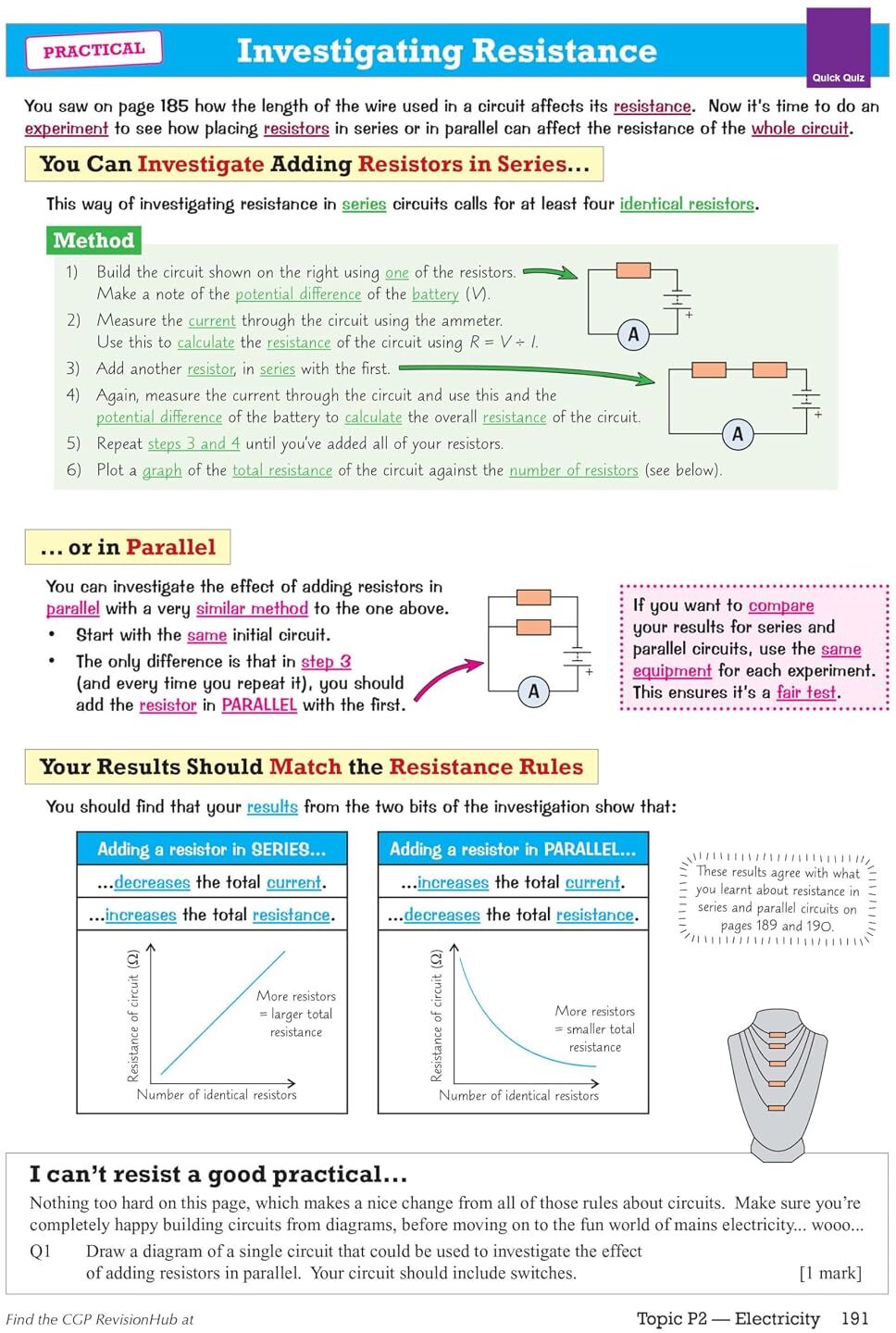
CGP Books CGP GCSE Combined Science AQA Revision Bundle – Revision Guide & WorkbookCGP Books are simply the best for revision! This fantastic GCSE Combined Science bundle has everything you need to ace the AQA Higher Level exams. There are detailed notes for every topic in the Revision Guide, plenty of exam-style questions, as well as loads more online revision in CGP RevisionHub to use alongside your book! GCSE Combined Science AQA Higher Revision Guide with CGP RevisionHub (9781782945598) GCSE Combined Science AQA Higher Exam Practice Workbook with CGP RevisionHub (9781789087543) GCSE Combined Science AQA Higher Level Revision Guide with CGP RevisionHub When it comes to Grade 9-1 GCSE Combined Science exam prep, nothing beats good old-fashioned practice. This Exam Practice Workbook is bursting with realistic exam-style questions for the entire AQA course (Higher level), including coverage of Working Scientifically, AO3 practical skills and all the required practical activities. Every question is labelled with a grade, so it's easy for students to tailor their practice for their target grade or focus on the tough stuff! Detailed step-by-step answers are included at the back of the book. What's more, we've also put together some free "What to Expect in the Exam" information, available via a link in the book! GCSE Combined Science AQA Higher Level Exam Practice Workbook with CGP RevisionHub This brilliant CGP Exam Practice Workbook is the perfect way to put all your AQA GCSE Combined Science knowledge to the test. It covers the entire Higher Level course and also comes with lots of online revision in the brand new CGP RevisionHub. In the book, there are: Exam-style questions for realistic practice on every topic, including the required practicals Detailed answers to mark your work In CGP RevisionHub, you'll find: An Online Workbook with all the questions from your book that you can filter by paper or topic, plus progress trackers to see how you’re getting on Video Solutions to help you scoop up every last mark Quick Quizzes to test yourself on the maths skills you’ll need for the exams And more — wow! When your book arrives, just use the unique code printed inside the front cover to access your online revision.22,99 £*Shipping: 2,99 £Secure redirect to the provider
-
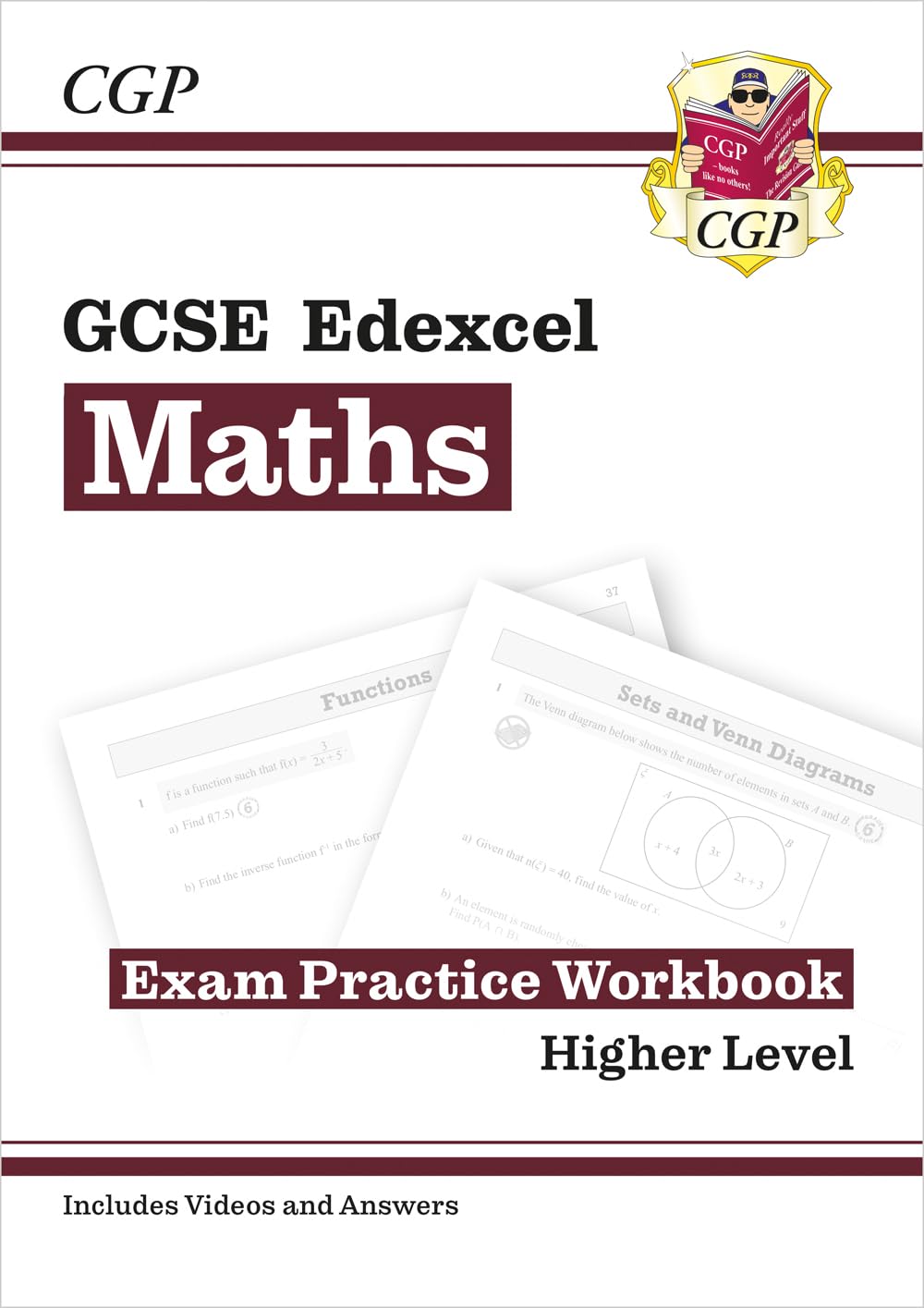
CGP Books CGP GCSE Maths Edexcel Revision Bundle – Revision Guide, Workbook & 10-Minute TestsCGP Books are simply the best for revision! This brilliant Edexcel GCSE Maths bundle has everything kids need for exam success. It contains three books full of revision and practice — all perfectly tailored to the Higher level. GCSE Maths Edexcel Revision Guide — Higher (9781782944041) GCSE Maths Edexcel 10-Minute Tests — Higher (9781789081312) GCSE Maths Edexcel Exam Practice Workbook — Higher (9781782944034) GCSE Maths Edexcel Revision Guide — Higher Our Higher Level GCSE Maths Revision Guide for the Edexcel course is packed with concise, student-friendly explanations of every topic, backed up with plenty of step-by-step examples, in CGP's clear informal and (dare we say) humorous style. We've also included helpful grade stamps to show the difficulty level of each topic, alongside plenty of exam-style questions with answers at the back! QR codes throughout give quick and easy access to worked video solutions from our in-house experts, plus a selection of challenging online quizzes! GCSE Maths Edexcel 10-Minute Tests — Higher This Edexcel Grade 9-1 GCSE Higher Maths book is packed with quick-fire tests, all at the perfect difficulty for students aiming for those high grades. It consists of over thirty bite-sized tests, containing a range of topics, calculator and non-calculator questions, plus those tricky problem solving questions. CGP’s 10-Minute Test books are absolutely perfect for short bursts of confidence-building exam-practice, so students are fully prepared on the big day. Answers and mark schemes are included, for easy marking and progress tracking. GCSE Maths Edexcel Exam Practice Workbook — Higher Packed with exam-style questions plus scaffolded answers and helpful tips – perfect for guided practice. This Higher Level Edexcel GCSE Maths Exam Practice Workbook contains a huge range of realistic exam-style questions for every topic, with grade stamps to indicate the difficulty level and helpful tips for the trickier questions. Step-by-step solutions (with a full mark scheme) are included. The book is rounded off with a full set of realistic mock exam papers - the answers to these are available to download from the CGP website.18,99 £*Shipping: 2,99 £Secure redirect to the provider
-
CGP Books CGP GCSE Maths AQA Revision Bundle – Revision Guide, Workbook & 10-Minute TestsCGP Books are simply the best for revision! This brilliant AQA GCSE Maths bundle has everything kids need for exam success. It contains three books full of revision and practice — all perfectly tailored to the Higher level. GCSE Maths AQA Revision Guide — Higher (9781782943952) GCSE Maths AQA 10-Minute Tests — Higher (9781789081336) GCSE Maths AQA Exam Practice Workbook —Higher (9781782943945) GCSE Maths AQA Revision Guide: Higher Level Our Higher Level GCSE Maths Revision Guide for the AQA course is packed with concise, student-friendly explanations of every topic, backed up with plenty of step-by-step examples, in CGP's clear informal and (dare we say) humorous style. We've also included helpful grade stamps to show the difficulty level of each topic, alongside plenty of exam-style questions with answers at the back! QR codes throughout give quick and easy access to worked video solutions from our in-house experts, plus a selection of challenging online quizzes! GCSE Maths AQA Exam Practice Workbook: Higher Level Packed with realistic exam-style questions for every topic, this newly updated Exam Practice Workbook is perfectly matched to the Higher Level AQA GCSE Maths course. Handy grade stamps indicate the difficulty level of each question, and problem-solving stamps those that require a bit of extra thought. There are also plenty of helpful exam tips throughout the book. Plus, it comes with complete step-by-step solutions (with a full mark scheme) at the back of the book, so it’s simple for students to check and correct their work – and there are even QR codes to access brilliant new worked video solutions! GCSE Mathematics AQA 10-Minute Tests - Higher Level This AQA Grade 9-1 GCSE Maths book is packed with quick-fire tests, all set at the perfect difficulty for students working at a Higher level (Grades 4-9). It consists of over thirty bite-sized tests, containing a range of topics, calculator and non-calculator questions, plus those tricky problem solving questions. CGP's 10-Minute Test books are absolutely perfect for short bursts of confidence-building exam-practice, so students are fully prepared on the big day! Answers and mark schemes are included, for easy marking and progress tracking. Sweet!18,99 £*Shipping: 2,99 £Secure redirect to the provider
-
Uplifted Goods Character Theme LED Digital Timepiece For Children dEstablish a high level of personal time management with this High Performance Youth Chronographic Hub. Engineered with a Reinforced Polymeric Structural Shield and a specialized characterthemed frame, this watch is designed to provide a definitive...34,97 $*Shipping: 0,00 $Secure redirect to the provider


-
What are the rules for the Lewis structure in compounds?
The Lewis structure of a compound follows certain rules to accurately represent the arrangement of atoms and electrons. These rules include: 1) Each atom should have an octet of electrons, except for hydrogen which can have a duet. 2) The total number of valence electrons should be accounted for in the structure. 3) The most electronegative atom is usually placed in the center, with other atoms bonded to it. 4) Double or triple bonds may be used to satisfy the octet rule for atoms that need more than one bond. Following these rules helps to create an accurate representation of the compound's structure and bonding. **
-
Can you help me with chemistry? I need information about atomic compounds, metal compounds, and ionic compounds.
Of course! Atomic compounds are formed when two or more non-metal atoms are chemically bonded together, such as in molecules like water (H2O) and carbon dioxide (CO2). Metal compounds are formed when a metal atom is bonded to one or more non-metal atoms, such as in compounds like sodium chloride (NaCl) and iron oxide (Fe2O3). Ionic compounds are formed when a metal atom transfers one or more electrons to a non-metal atom, resulting in the formation of positively and negatively charged ions that are attracted to each other, such as in compounds like sodium chloride (NaCl) and calcium carbonate (CaCO3). Let me know if you need more specific information or examples! **
-
Why do molecular compounds have lower boiling points than ionic compounds?
Molecular compounds have lower boiling points than ionic compounds because the intermolecular forces holding the molecules together are generally weaker than the electrostatic forces holding ions together in ionic compounds. In molecular compounds, the intermolecular forces are typically van der Waals forces, dipole-dipole interactions, or hydrogen bonding, which are weaker than the strong ionic bonds in ionic compounds. As a result, less energy is required to overcome these weaker intermolecular forces, leading to lower boiling points for molecular compounds compared to ionic compounds. **
-
What are sodium compounds?
Sodium compounds are chemical compounds that contain sodium as one of their elements. These compounds can be found in various forms, such as sodium chloride (table salt), sodium hydroxide (lye), and sodium bicarbonate (baking soda). Sodium compounds are widely used in industry, agriculture, and everyday life due to their diverse properties and applications. **


Name the isomeric compounds.
Isomers are compounds that have the same molecular formula but different structural arrangements. Some examples of isomeric compounds include butane and isobutane, which both have the molecular formula C4H10 but differ in their structural arrangement. Another example is glucose and fructose, which both have the molecular formula C6H12O6 but have different structural arrangements and properties. **
Are bioatomic compounds destructible?
Yes, bioatomic compounds are destructible. These compounds are made up of atoms and molecules that can be broken down through various chemical and biological processes. For example, enzymes in the body can break down bioatomic compounds during digestion. Additionally, environmental factors such as heat, light, and other chemical reactions can also lead to the destruction of bioatomic compounds. **
Top-Angebote
Products related to Compounds:
-
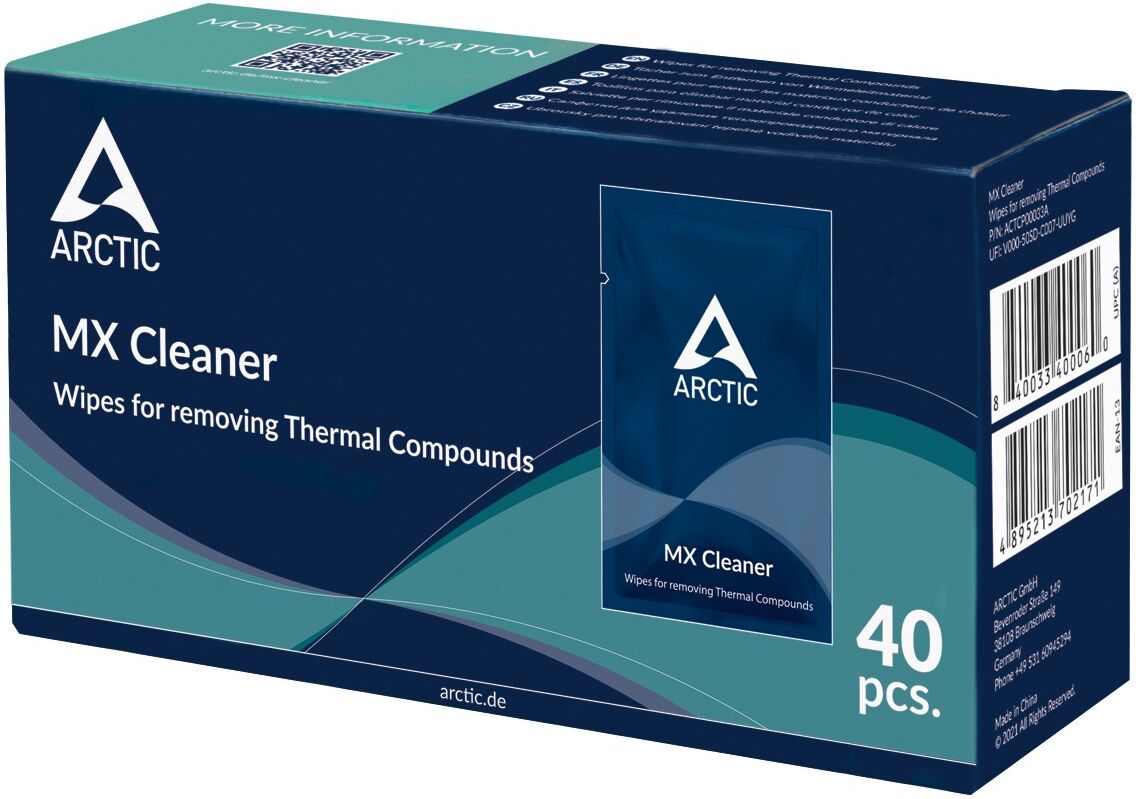
Arctic MX Cleaner - Wipes for removing Thermal Compounds (40 Pieces)ARCTIC MX Cleaner is a box of 40 individually sealed wet wipes for removing old thermal paste from CPUs, GPUs and heatsinks before reapplying compound. The cleaning fluid is limonene-based, derived from citrus oil, and contains no alcohol or benzene, so it is gentle on metals and alloys and leaves no residue. Each wipe is packed airtight to stay moist until it is used.12,99 £*Shipping: 0,00 £Secure redirect to the provider
-
Uplifted Goods Character Theme LED Digital Timepiece For Children bEstablish a high level of personal time management with this High Performance Youth Chronographic Hub. Engineered with a Reinforced Polymeric Structural Shield and a specialized characterthemed frame, this watch is designed to provide a definitive...34,97 $*Shipping: 0,00 $Secure redirect to the provider
-
CGP Books CGP GCSE Combined Science AQA Revision Bundle – Revision Guide & WorkbookCGP Books are simply the best for revision! This fantastic GCSE Combined Science bundle has everything you need to ace the AQA Higher Level exams. There are detailed notes for every topic in the Revision Guide, plenty of exam-style questions, as well as loads more online revision in CGP RevisionHub to use alongside your book! GCSE Combined Science AQA Higher Revision Guide with CGP RevisionHub (9781782945598) GCSE Combined Science AQA Higher Exam Practice Workbook with CGP RevisionHub (9781789087543) GCSE Combined Science AQA Higher Level Revision Guide with CGP RevisionHub When it comes to Grade 9-1 GCSE Combined Science exam prep, nothing beats good old-fashioned practice. This Exam Practice Workbook is bursting with realistic exam-style questions for the entire AQA course (Higher level), including coverage of Working Scientifically, AO3 practical skills and all the required practical activities. Every question is labelled with a grade, so it's easy for students to tailor their practice for their target grade or focus on the tough stuff! Detailed step-by-step answers are included at the back of the book. What's more, we've also put together some free "What to Expect in the Exam" information, available via a link in the book! GCSE Combined Science AQA Higher Level Exam Practice Workbook with CGP RevisionHub This brilliant CGP Exam Practice Workbook is the perfect way to put all your AQA GCSE Combined Science knowledge to the test. It covers the entire Higher Level course and also comes with lots of online revision in the brand new CGP RevisionHub. In the book, there are: Exam-style questions for realistic practice on every topic, including the required practicals Detailed answers to mark your work In CGP RevisionHub, you'll find: An Online Workbook with all the questions from your book that you can filter by paper or topic, plus progress trackers to see how you’re getting on Video Solutions to help you scoop up every last mark Quick Quizzes to test yourself on the maths skills you’ll need for the exams And more — wow! When your book arrives, just use the unique code printed inside the front cover to access your online revision.22,99 £*Shipping: 2,99 £Secure redirect to the provider
-
CGP Books CGP GCSE Maths Edexcel Revision Bundle – Revision Guide, Workbook & 10-Minute TestsCGP Books are simply the best for revision! This brilliant Edexcel GCSE Maths bundle has everything kids need for exam success. It contains three books full of revision and practice — all perfectly tailored to the Higher level. GCSE Maths Edexcel Revision Guide — Higher (9781782944041) GCSE Maths Edexcel 10-Minute Tests — Higher (9781789081312) GCSE Maths Edexcel Exam Practice Workbook — Higher (9781782944034) GCSE Maths Edexcel Revision Guide — Higher Our Higher Level GCSE Maths Revision Guide for the Edexcel course is packed with concise, student-friendly explanations of every topic, backed up with plenty of step-by-step examples, in CGP's clear informal and (dare we say) humorous style. We've also included helpful grade stamps to show the difficulty level of each topic, alongside plenty of exam-style questions with answers at the back! QR codes throughout give quick and easy access to worked video solutions from our in-house experts, plus a selection of challenging online quizzes! GCSE Maths Edexcel 10-Minute Tests — Higher This Edexcel Grade 9-1 GCSE Higher Maths book is packed with quick-fire tests, all at the perfect difficulty for students aiming for those high grades. It consists of over thirty bite-sized tests, containing a range of topics, calculator and non-calculator questions, plus those tricky problem solving questions. CGP’s 10-Minute Test books are absolutely perfect for short bursts of confidence-building exam-practice, so students are fully prepared on the big day. Answers and mark schemes are included, for easy marking and progress tracking. GCSE Maths Edexcel Exam Practice Workbook — Higher Packed with exam-style questions plus scaffolded answers and helpful tips – perfect for guided practice. This Higher Level Edexcel GCSE Maths Exam Practice Workbook contains a huge range of realistic exam-style questions for every topic, with grade stamps to indicate the difficulty level and helpful tips for the trickier questions. Step-by-step solutions (with a full mark scheme) are included. The book is rounded off with a full set of realistic mock exam papers - the answers to these are available to download from the CGP website.18,99 £*Shipping: 2,99 £Secure redirect to the provider
-
How do you distinguish determinative compounds and possessive compounds?
Determinative compounds are formed by combining two words to create a new concept, where the first word determines the meaning of the second word. For example, "blackboard" is a determinative compound where "black" determines the type of "board." Possessive compounds, on the other hand, indicate possession or relationship between the two words. For example, "John's car" is a possessive compound where "John" possesses the "car." In summary, determinative compounds determine the meaning of the second word, while possessive compounds indicate possession or relationship between the two words. **
-
How can one distinguish ionic compounds from molecular compounds?
Ionic compounds are formed from the attraction between positively and negatively charged ions, while molecular compounds are formed from the sharing of electrons between atoms. One way to distinguish between the two is to look at their chemical formulas. Ionic compounds typically consist of a metal and a nonmetal, while molecular compounds consist of nonmetals only. Additionally, ionic compounds tend to have higher melting and boiling points compared to molecular compounds due to their strong electrostatic attractions. Finally, conducting a simple solubility test can also help distinguish between the two types of compounds, as ionic compounds are often soluble in water while molecular compounds may not be. **
-
What are the rules for the Lewis structure in compounds?
The Lewis structure of a compound follows certain rules to accurately represent the arrangement of atoms and electrons. These rules include: 1) Each atom should have an octet of electrons, except for hydrogen which can have a duet. 2) The total number of valence electrons should be accounted for in the structure. 3) The most electronegative atom is usually placed in the center, with other atoms bonded to it. 4) Double or triple bonds may be used to satisfy the octet rule for atoms that need more than one bond. Following these rules helps to create an accurate representation of the compound's structure and bonding. **
-
Can you help me with chemistry? I need information about atomic compounds, metal compounds, and ionic compounds.
Of course! Atomic compounds are formed when two or more non-metal atoms are chemically bonded together, such as in molecules like water (H2O) and carbon dioxide (CO2). Metal compounds are formed when a metal atom is bonded to one or more non-metal atoms, such as in compounds like sodium chloride (NaCl) and iron oxide (Fe2O3). Ionic compounds are formed when a metal atom transfers one or more electrons to a non-metal atom, resulting in the formation of positively and negatively charged ions that are attracted to each other, such as in compounds like sodium chloride (NaCl) and calcium carbonate (CaCO3). Let me know if you need more specific information or examples! **
Similar search terms for Compounds
-
CGP Books CGP GCSE Maths AQA Revision Bundle – Revision Guide, Workbook & 10-Minute TestsCGP Books are simply the best for revision! This brilliant AQA GCSE Maths bundle has everything kids need for exam success. It contains three books full of revision and practice — all perfectly tailored to the Higher level. GCSE Maths AQA Revision Guide — Higher (9781782943952) GCSE Maths AQA 10-Minute Tests — Higher (9781789081336) GCSE Maths AQA Exam Practice Workbook —Higher (9781782943945) GCSE Maths AQA Revision Guide: Higher Level Our Higher Level GCSE Maths Revision Guide for the AQA course is packed with concise, student-friendly explanations of every topic, backed up with plenty of step-by-step examples, in CGP's clear informal and (dare we say) humorous style. We've also included helpful grade stamps to show the difficulty level of each topic, alongside plenty of exam-style questions with answers at the back! QR codes throughout give quick and easy access to worked video solutions from our in-house experts, plus a selection of challenging online quizzes! GCSE Maths AQA Exam Practice Workbook: Higher Level Packed with realistic exam-style questions for every topic, this newly updated Exam Practice Workbook is perfectly matched to the Higher Level AQA GCSE Maths course. Handy grade stamps indicate the difficulty level of each question, and problem-solving stamps those that require a bit of extra thought. There are also plenty of helpful exam tips throughout the book. Plus, it comes with complete step-by-step solutions (with a full mark scheme) at the back of the book, so it’s simple for students to check and correct their work – and there are even QR codes to access brilliant new worked video solutions! GCSE Mathematics AQA 10-Minute Tests - Higher Level This AQA Grade 9-1 GCSE Maths book is packed with quick-fire tests, all set at the perfect difficulty for students working at a Higher level (Grades 4-9). It consists of over thirty bite-sized tests, containing a range of topics, calculator and non-calculator questions, plus those tricky problem solving questions. CGP's 10-Minute Test books are absolutely perfect for short bursts of confidence-building exam-practice, so students are fully prepared on the big day! Answers and mark schemes are included, for easy marking and progress tracking. Sweet!18,99 £*Shipping: 2,99 £Secure redirect to the provider
-
Uplifted Goods Character Theme LED Digital Timepiece For Children dEstablish a high level of personal time management with this High Performance Youth Chronographic Hub. Engineered with a Reinforced Polymeric Structural Shield and a specialized characterthemed frame, this watch is designed to provide a definitive...34,97 $*Shipping: 0,00 $Secure redirect to the provider
-
Uplifted Goods Character Theme LED Digital Timepiece For Children cEstablish a high level of personal time management with this High Performance Youth Chronographic Hub. Engineered with a Reinforced Polymeric Structural Shield and a specialized characterthemed frame, this watch is designed to provide a definitive...34,97 $*Shipping: 0,00 $Secure redirect to the provider
-
Uplifted Goods Character Theme LED Digital Timepiece For Children eEstablish a high level of personal time management with this High Performance Youth Chronographic Hub. Engineered with a Reinforced Polymeric Structural Shield and a specialized characterthemed frame, this watch is designed to provide a definitive...34,97 $*Shipping: 0,00 $Secure redirect to the provider
-
Why do molecular compounds have lower boiling points than ionic compounds?
Molecular compounds have lower boiling points than ionic compounds because the intermolecular forces holding the molecules together are generally weaker than the electrostatic forces holding ions together in ionic compounds. In molecular compounds, the intermolecular forces are typically van der Waals forces, dipole-dipole interactions, or hydrogen bonding, which are weaker than the strong ionic bonds in ionic compounds. As a result, less energy is required to overcome these weaker intermolecular forces, leading to lower boiling points for molecular compounds compared to ionic compounds. **
-
What are sodium compounds?
Sodium compounds are chemical compounds that contain sodium as one of their elements. These compounds can be found in various forms, such as sodium chloride (table salt), sodium hydroxide (lye), and sodium bicarbonate (baking soda). Sodium compounds are widely used in industry, agriculture, and everyday life due to their diverse properties and applications. **
-
Name the isomeric compounds.
Isomers are compounds that have the same molecular formula but different structural arrangements. Some examples of isomeric compounds include butane and isobutane, which both have the molecular formula C4H10 but differ in their structural arrangement. Another example is glucose and fructose, which both have the molecular formula C6H12O6 but have different structural arrangements and properties. **
-
Are bioatomic compounds destructible?
Yes, bioatomic compounds are destructible. These compounds are made up of atoms and molecules that can be broken down through various chemical and biological processes. For example, enzymes in the body can break down bioatomic compounds during digestion. Additionally, environmental factors such as heat, light, and other chemical reactions can also lead to the destruction of bioatomic compounds. **
* All prices are inclusive of VAT and, if applicable, plus shipping costs. The offer information is based on the details provided by the respective shop and is updated through automated processes. Real-time updates do not occur, so deviations can occur in individual cases. ** Note: Parts of this content were created by AI.