Buy screenwriting.eu ?
We are moving the project
screenwriting.eu .
Are you interested in purchasing the domain
screenwriting.eu ?
domain@kv-gmbh.de · 0541-91531010
Buy screenwriting.eu ?
What is the theme for the elementary school internship?
The theme for the elementary school internship is "Exploring the World Through the Eyes of a Child." This theme focuses on understanding the unique perspectives, experiences, and learning styles of young students. Interns will have the opportunity to engage in activities that promote creativity, curiosity, and empathy in order to better connect with and support the development of elementary school children. Through this theme, interns will gain valuable insights into the world of elementary education and the importance of fostering a positive and inclusive learning environment for young learners. **
How can elementary particles decay, even though they are elementary, meaning they consist of no further particles and have no internal structure?
Elementary particles can decay through a process known as particle decay, where they transform into other particles. This can occur due to the weak nuclear force, which is responsible for certain types of particle decay. Despite being considered elementary, these particles can still decay because they can interact with other particles and fields in their environment, leading to their transformation into different particles. This process is governed by the laws of quantum mechanics and the fundamental forces of nature. **

Similar search terms for Elementary
Top-Angebote
Products related to Elementary:
-
Uplifted Goods Character Theme LED Digital Timepiece For Children eEstablish a high level of personal time management with this High Performance Youth Chronographic Hub. Engineered with a Reinforced Polymeric Structural Shield and a specialized characterthemed frame, this watch is designed to provide a definitive...34,97 $*Shipping: 0,00 $Secure redirect to the provider
-
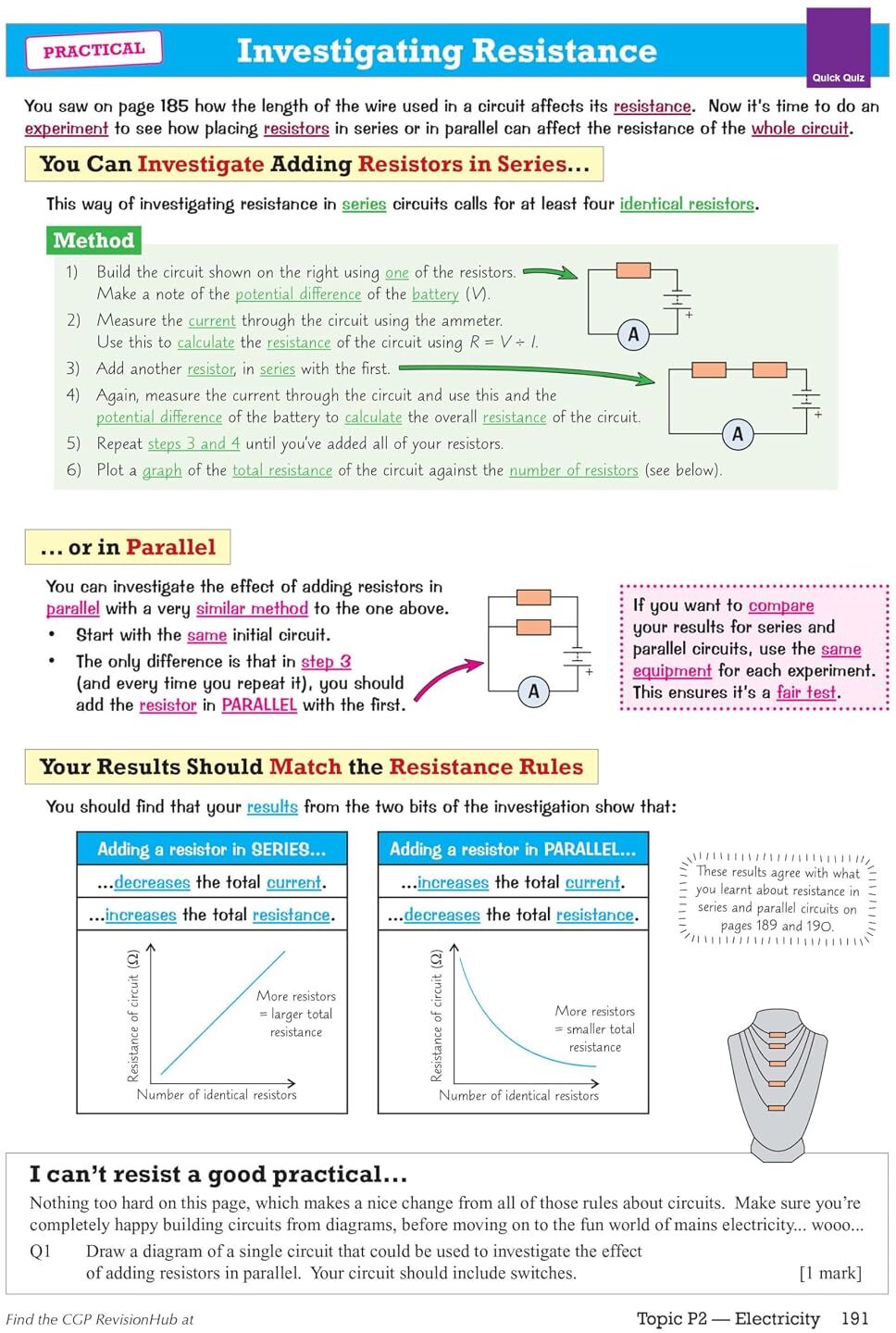
CGP Books CGP GCSE Combined Science AQA Revision Bundle – Revision Guide & WorkbookCGP Books are simply the best for revision! This fantastic GCSE Combined Science bundle has everything you need to ace the AQA Higher Level exams. There are detailed notes for every topic in the Revision Guide, plenty of exam-style questions, as well as loads more online revision in CGP RevisionHub to use alongside your book! GCSE Combined Science AQA Higher Revision Guide with CGP RevisionHub (9781782945598) GCSE Combined Science AQA Higher Exam Practice Workbook with CGP RevisionHub (9781789087543) GCSE Combined Science AQA Higher Level Revision Guide with CGP RevisionHub When it comes to Grade 9-1 GCSE Combined Science exam prep, nothing beats good old-fashioned practice. This Exam Practice Workbook is bursting with realistic exam-style questions for the entire AQA course (Higher level), including coverage of Working Scientifically, AO3 practical skills and all the required practical activities. Every question is labelled with a grade, so it's easy for students to tailor their practice for their target grade or focus on the tough stuff! Detailed step-by-step answers are included at the back of the book. What's more, we've also put together some free "What to Expect in the Exam" information, available via a link in the book! GCSE Combined Science AQA Higher Level Exam Practice Workbook with CGP RevisionHub This brilliant CGP Exam Practice Workbook is the perfect way to put all your AQA GCSE Combined Science knowledge to the test. It covers the entire Higher Level course and also comes with lots of online revision in the brand new CGP RevisionHub. In the book, there are: Exam-style questions for realistic practice on every topic, including the required practicals Detailed answers to mark your work In CGP RevisionHub, you'll find: An Online Workbook with all the questions from your book that you can filter by paper or topic, plus progress trackers to see how you’re getting on Video Solutions to help you scoop up every last mark Quick Quizzes to test yourself on the maths skills you’ll need for the exams And more — wow! When your book arrives, just use the unique code printed inside the front cover to access your online revision.22,99 £*Shipping: 2,99 £Secure redirect to the provider
-
CGP Books CGP GCSE Maths Edexcel Revision Bundle – Revision Guide, Workbook & 10-Minute TestsCGP Books are simply the best for revision! This brilliant Edexcel GCSE Maths bundle has everything kids need for exam success. It contains three books full of revision and practice — all perfectly tailored to the Higher level. GCSE Maths Edexcel Revision Guide — Higher (9781782944041) GCSE Maths Edexcel 10-Minute Tests — Higher (9781789081312) GCSE Maths Edexcel Exam Practice Workbook — Higher (9781782944034) GCSE Maths Edexcel Revision Guide — Higher Our Higher Level GCSE Maths Revision Guide for the Edexcel course is packed with concise, student-friendly explanations of every topic, backed up with plenty of step-by-step examples, in CGP's clear informal and (dare we say) humorous style. We've also included helpful grade stamps to show the difficulty level of each topic, alongside plenty of exam-style questions with answers at the back! QR codes throughout give quick and easy access to worked video solutions from our in-house experts, plus a selection of challenging online quizzes! GCSE Maths Edexcel 10-Minute Tests — Higher This Edexcel Grade 9-1 GCSE Higher Maths book is packed with quick-fire tests, all at the perfect difficulty for students aiming for those high grades. It consists of over thirty bite-sized tests, containing a range of topics, calculator and non-calculator questions, plus those tricky problem solving questions. CGP’s 10-Minute Test books are absolutely perfect for short bursts of confidence-building exam-practice, so students are fully prepared on the big day. Answers and mark schemes are included, for easy marking and progress tracking. GCSE Maths Edexcel Exam Practice Workbook — Higher Packed with exam-style questions plus scaffolded answers and helpful tips – perfect for guided practice. This Higher Level Edexcel GCSE Maths Exam Practice Workbook contains a huge range of realistic exam-style questions for every topic, with grade stamps to indicate the difficulty level and helpful tips for the trickier questions. Step-by-step solutions (with a full mark scheme) are included. The book is rounded off with a full set of realistic mock exam papers - the answers to these are available to download from the CGP website.18,99 £*Shipping: 2,99 £Secure redirect to the provider
-
Uplifted Goods Character Theme LED Digital Timepiece For Children dEstablish a high level of personal time management with this High Performance Youth Chronographic Hub. Engineered with a Reinforced Polymeric Structural Shield and a specialized characterthemed frame, this watch is designed to provide a definitive...34,97 $*Shipping: 0,00 $Secure redirect to the provider


-
How do elementary particles have different properties if they have no internal structure?
Elementary particles have different properties such as mass, charge, and spin because these properties are intrinsic to the particles themselves. These properties are not dependent on any internal structure but are fundamental characteristics of the particles. For example, the mass of a particle is a measure of its resistance to acceleration, and the charge is a fundamental property that determines how the particle interacts with electromagnetic fields. These properties are defined by the particle's interactions with other particles and fields in the universe, rather than by any internal structure. **
-
How do elementary particles have different properties if they have no inner structure?
Elementary particles have different properties such as mass, charge, and spin because these properties are intrinsic to the particles themselves. These properties are fundamental characteristics of the particles and do not arise from any internal structure. Instead, they are defined by the interactions and behaviors of the particles in the fundamental forces of nature. The properties of elementary particles are determined by their quantum numbers and are a result of the symmetries and dynamics of the underlying quantum field theories. **
-
How can elementary particles decay, even though they are elementary, meaning they do not consist of any further particles and have no internal structure?
Elementary particles can decay through the fundamental forces of nature, such as the weak nuclear force. This force allows for certain elementary particles to transform into other particles, releasing energy in the process. While elementary particles are considered fundamental and do not have internal structure, they can still undergo decay processes due to the inherent probabilistic nature of quantum mechanics. This means that even though they are elementary, they can still interact and transform into different particles under certain conditions. **
-
What is an elementary group?
An elementary group is a group in which all elements have the same order. This means that every element in the group, when raised to a certain power, will result in the identity element of the group. In other words, the group is generated by a single element. Elementary groups are simple and have a straightforward structure, making them easier to study and understand compared to more complex groups. **


What is elementary function theory?
Elementary function theory is a branch of mathematics that focuses on the study of elementary functions, which are functions that can be constructed from basic operations such as addition, subtraction, multiplication, division, and taking roots. This theory deals with properties, behavior, and applications of elementary functions, such as polynomials, exponential functions, logarithmic functions, trigonometric functions, and their combinations. Elementary function theory is fundamental in calculus, differential equations, and other areas of mathematics, providing a framework for understanding and analyzing a wide range of mathematical functions. **
Are all metals elementary substances?
No, not all metals are elementary substances. Some metals are compounds that are made up of two or more elements. For example, bronze is a metal alloy made up of copper and tin. Additionally, some metals can form different compounds with other elements, resulting in a wide variety of metal compounds. **
Top-Angebote
Products related to Elementary:
-
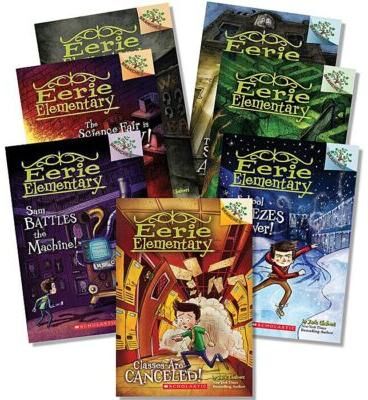
Branches Readers Eerie Elementary Paperback Boxed Set (Books #1-4)This series is part of Scholastic's early chapter book line called Branches, which is aimed at newly independent readers. With easy-to-read text, high-interest content, fast-paced plots, and illustrations on every page, these books will boost...23,76 $*Shipping: 0,00 $Secure redirect to the provider
-
Branches Readers Eerie Elementary Series: Book Collection (Books #1-10) - by Jack ChabertScholastic proudly presents Branches - a unique line of books specifically designed for newly independent readers who are ready to make the exciting leap from leveled readers, but not quite prepared for a traditional chapter book.All Branches books...42,41 $*Shipping: 0,00 $Secure redirect to the provider
-
Uplifted Goods Character Theme LED Digital Timepiece For Children eEstablish a high level of personal time management with this High Performance Youth Chronographic Hub. Engineered with a Reinforced Polymeric Structural Shield and a specialized characterthemed frame, this watch is designed to provide a definitive...34,97 $*Shipping: 0,00 $Secure redirect to the provider
-
CGP Books CGP GCSE Combined Science AQA Revision Bundle – Revision Guide & WorkbookCGP Books are simply the best for revision! This fantastic GCSE Combined Science bundle has everything you need to ace the AQA Higher Level exams. There are detailed notes for every topic in the Revision Guide, plenty of exam-style questions, as well as loads more online revision in CGP RevisionHub to use alongside your book! GCSE Combined Science AQA Higher Revision Guide with CGP RevisionHub (9781782945598) GCSE Combined Science AQA Higher Exam Practice Workbook with CGP RevisionHub (9781789087543) GCSE Combined Science AQA Higher Level Revision Guide with CGP RevisionHub When it comes to Grade 9-1 GCSE Combined Science exam prep, nothing beats good old-fashioned practice. This Exam Practice Workbook is bursting with realistic exam-style questions for the entire AQA course (Higher level), including coverage of Working Scientifically, AO3 practical skills and all the required practical activities. Every question is labelled with a grade, so it's easy for students to tailor their practice for their target grade or focus on the tough stuff! Detailed step-by-step answers are included at the back of the book. What's more, we've also put together some free "What to Expect in the Exam" information, available via a link in the book! GCSE Combined Science AQA Higher Level Exam Practice Workbook with CGP RevisionHub This brilliant CGP Exam Practice Workbook is the perfect way to put all your AQA GCSE Combined Science knowledge to the test. It covers the entire Higher Level course and also comes with lots of online revision in the brand new CGP RevisionHub. In the book, there are: Exam-style questions for realistic practice on every topic, including the required practicals Detailed answers to mark your work In CGP RevisionHub, you'll find: An Online Workbook with all the questions from your book that you can filter by paper or topic, plus progress trackers to see how you’re getting on Video Solutions to help you scoop up every last mark Quick Quizzes to test yourself on the maths skills you’ll need for the exams And more — wow! When your book arrives, just use the unique code printed inside the front cover to access your online revision.22,99 £*Shipping: 2,99 £Secure redirect to the provider
-
What is the theme for the elementary school internship?
The theme for the elementary school internship is "Exploring the World Through the Eyes of a Child." This theme focuses on understanding the unique perspectives, experiences, and learning styles of young students. Interns will have the opportunity to engage in activities that promote creativity, curiosity, and empathy in order to better connect with and support the development of elementary school children. Through this theme, interns will gain valuable insights into the world of elementary education and the importance of fostering a positive and inclusive learning environment for young learners. **
-
How can elementary particles decay, even though they are elementary, meaning they consist of no further particles and have no internal structure?
Elementary particles can decay through a process known as particle decay, where they transform into other particles. This can occur due to the weak nuclear force, which is responsible for certain types of particle decay. Despite being considered elementary, these particles can still decay because they can interact with other particles and fields in their environment, leading to their transformation into different particles. This process is governed by the laws of quantum mechanics and the fundamental forces of nature. **
-
How do elementary particles have different properties if they have no internal structure?
Elementary particles have different properties such as mass, charge, and spin because these properties are intrinsic to the particles themselves. These properties are not dependent on any internal structure but are fundamental characteristics of the particles. For example, the mass of a particle is a measure of its resistance to acceleration, and the charge is a fundamental property that determines how the particle interacts with electromagnetic fields. These properties are defined by the particle's interactions with other particles and fields in the universe, rather than by any internal structure. **
-
How do elementary particles have different properties if they have no inner structure?
Elementary particles have different properties such as mass, charge, and spin because these properties are intrinsic to the particles themselves. These properties are fundamental characteristics of the particles and do not arise from any internal structure. Instead, they are defined by the interactions and behaviors of the particles in the fundamental forces of nature. The properties of elementary particles are determined by their quantum numbers and are a result of the symmetries and dynamics of the underlying quantum field theories. **
Similar search terms for Elementary
-
CGP Books CGP GCSE Maths Edexcel Revision Bundle – Revision Guide, Workbook & 10-Minute TestsCGP Books are simply the best for revision! This brilliant Edexcel GCSE Maths bundle has everything kids need for exam success. It contains three books full of revision and practice — all perfectly tailored to the Higher level. GCSE Maths Edexcel Revision Guide — Higher (9781782944041) GCSE Maths Edexcel 10-Minute Tests — Higher (9781789081312) GCSE Maths Edexcel Exam Practice Workbook — Higher (9781782944034) GCSE Maths Edexcel Revision Guide — Higher Our Higher Level GCSE Maths Revision Guide for the Edexcel course is packed with concise, student-friendly explanations of every topic, backed up with plenty of step-by-step examples, in CGP's clear informal and (dare we say) humorous style. We've also included helpful grade stamps to show the difficulty level of each topic, alongside plenty of exam-style questions with answers at the back! QR codes throughout give quick and easy access to worked video solutions from our in-house experts, plus a selection of challenging online quizzes! GCSE Maths Edexcel 10-Minute Tests — Higher This Edexcel Grade 9-1 GCSE Higher Maths book is packed with quick-fire tests, all at the perfect difficulty for students aiming for those high grades. It consists of over thirty bite-sized tests, containing a range of topics, calculator and non-calculator questions, plus those tricky problem solving questions. CGP’s 10-Minute Test books are absolutely perfect for short bursts of confidence-building exam-practice, so students are fully prepared on the big day. Answers and mark schemes are included, for easy marking and progress tracking. GCSE Maths Edexcel Exam Practice Workbook — Higher Packed with exam-style questions plus scaffolded answers and helpful tips – perfect for guided practice. This Higher Level Edexcel GCSE Maths Exam Practice Workbook contains a huge range of realistic exam-style questions for every topic, with grade stamps to indicate the difficulty level and helpful tips for the trickier questions. Step-by-step solutions (with a full mark scheme) are included. The book is rounded off with a full set of realistic mock exam papers - the answers to these are available to download from the CGP website.18,99 £*Shipping: 2,99 £Secure redirect to the provider
-
Uplifted Goods Character Theme LED Digital Timepiece For Children dEstablish a high level of personal time management with this High Performance Youth Chronographic Hub. Engineered with a Reinforced Polymeric Structural Shield and a specialized characterthemed frame, this watch is designed to provide a definitive...34,97 $*Shipping: 0,00 $Secure redirect to the provider
-
Uplifted Goods Character Theme LED Digital Timepiece For Children bEstablish a high level of personal time management with this High Performance Youth Chronographic Hub. Engineered with a Reinforced Polymeric Structural Shield and a specialized characterthemed frame, this watch is designed to provide a definitive...34,97 $*Shipping: 0,00 $Secure redirect to the provider
-
Uplifted Goods Character Theme LED Digital Timepiece For Children fEstablish a high level of personal time management with this High Performance Youth Chronographic Hub. Engineered with a Reinforced Polymeric Structural Shield and a specialized characterthemed frame, this watch is designed to provide a definitive...34,97 $*Shipping: 0,00 $Secure redirect to the provider
-
How can elementary particles decay, even though they are elementary, meaning they do not consist of any further particles and have no internal structure?
Elementary particles can decay through the fundamental forces of nature, such as the weak nuclear force. This force allows for certain elementary particles to transform into other particles, releasing energy in the process. While elementary particles are considered fundamental and do not have internal structure, they can still undergo decay processes due to the inherent probabilistic nature of quantum mechanics. This means that even though they are elementary, they can still interact and transform into different particles under certain conditions. **
-
What is an elementary group?
An elementary group is a group in which all elements have the same order. This means that every element in the group, when raised to a certain power, will result in the identity element of the group. In other words, the group is generated by a single element. Elementary groups are simple and have a straightforward structure, making them easier to study and understand compared to more complex groups. **
-
What is elementary function theory?
Elementary function theory is a branch of mathematics that focuses on the study of elementary functions, which are functions that can be constructed from basic operations such as addition, subtraction, multiplication, division, and taking roots. This theory deals with properties, behavior, and applications of elementary functions, such as polynomials, exponential functions, logarithmic functions, trigonometric functions, and their combinations. Elementary function theory is fundamental in calculus, differential equations, and other areas of mathematics, providing a framework for understanding and analyzing a wide range of mathematical functions. **
-
Are all metals elementary substances?
No, not all metals are elementary substances. Some metals are compounds that are made up of two or more elements. For example, bronze is a metal alloy made up of copper and tin. Additionally, some metals can form different compounds with other elements, resulting in a wide variety of metal compounds. **
* All prices are inclusive of VAT and, if applicable, plus shipping costs. The offer information is based on the details provided by the respective shop and is updated through automated processes. Real-time updates do not occur, so deviations can occur in individual cases. ** Note: Parts of this content were created by AI.